



Wall Street experienced a sharp downturn on Thursday as the initial euphoria surrounding artificial intelligence gave way to anxieties regarding industry-wide disruption and potential labour market displacement. While defensive sectors offered some sanctuary, the broader indices retreated as investors re-evaluated the long-term impact of AI on corporate profit margins and business models. This risk-off sentiment was further compounded by disappointing housing data and a significant correction in precious metals.
Key Takeaways:
- Dow Suffers Heavy Losses As Guidance Shocks Weigh: The Dow Jones Industrial Average fell 669.42 points, or 1.34%, to close at 49,451.98, snapping recent resilience as AI disruption fears escalated. Cisco Systems led declines after issuing disappointing quarterly guidance, dragging industrial and hardware-linked stocks lower and reinforcing concerns that rising costs and technological shifts are squeezing margins across legacy businesses.
- S&P 500 Extends Three-Day Decline: The S&P 500 dropped 1.57% to 6,832.76, marking its third consecutive daily loss. Selling was broad-based, with software and growth-oriented names under sustained pressure as investors reassessed valuations that had previously been justified by AI-driven optimism.
- Nasdaq Hit Hard By Software Weakness: The Nasdaq Composite slid 2.03% to 22,597.15 as losses accelerated across software stocks. Palantir and Autodesk extended steep year-to-date declines, while the broader software sector remained deeply under pressure following last month’s entry into bear market territory.
- European Markets Finish Mixed Amid Earnings Deluge: European markets concluded Thursday’s session with a mixed performance. The pan-European Stoxx 600 index closed 0.6% lower, with various national bourses showing divergent results; the UK’s FTSE 100 fell 0.67% to 10,402.44, while the French CAC 40 bucked the trend by gaining 0.33% to finish at 8,341. In Italy, the FTSE MIB dropped 0.62%, and Germany’s DAX remained nearly flat, losing just 0.01%. Economic sentiment was dampened by news that the UK economy grew by a mere 0.1% in the final quarter of 2025, falling short of the 0.2% expansion anticipated by analysts. Additionally, Dutch inflation was confirmed to have slowed to 2.4% in January.
- Asian Indices Reach Historic Highs Led by Japan: Asian equity markets demonstrated resilience on Thursday, largely ignoring the overnight weakness in the United States to post significant gains in several regions. Japan’s Nikkei 225 made history by breaching the 58,000 level for the first time before paring its advance to close virtually unchanged at 57,639.84, while the broader Topix index rose 0.7%. In South Korea, the Kospi index jumped more than 3% to reach a record closing high of 5,522.27, and Australia’s S&P/ASX 200 edged up 0.32% to 9,043.5. New Zealand’s S&P/NZX-50 also posted a modest gain of 0.18%, supported by strong earnings from Skellerup Holdings. Conversely, the Hang Seng Index in Hong Kong bucked the regional trend, falling 0.86% to 27,032.54, while mainland China’s CSI 300 managed a slight gain of 0.12%.
- Treasury Yields Fall as Risk Aversion Builds: U.S. Treasury yields moved sharply lower, with the 10-year yield down more than 8 basis points to 4.098%. The 30-year yield slipped to 4.733%, while the 2-year yield fell more than 5 basis points to 3.456%, reflecting demand for safety following weak housing data.
- Oil Prices Slide on Reduced IEA Demand Forecast: Crude oil prices faced significant downward pressure on Thursday, with both major benchmarks sliding nearly 3% following a downward revision in global demand forecasts. Brent crude futures fell $1.88, or 2.71%, to close at $67.52 per barrel, while US West Texas Intermediate (WTI) dropped $1.79, or 2.77%, to settle at $62.84. The International Energy Agency (IEA) sparked the sell-off by lowering its 2026 demand outlook, citing a projected surplus despite recent supply disruptions.
- US Jobless Claims Edge Lower but Miss Estimates: Initial jobless claims in the United States showed a slight decline last week, though the figures remained marginally above Wall Street’s expectations. For the week ending 7 February, first-time filings for unemployment benefits fell by 5,000 to a seasonally adjusted 227,000, missing the consensus estimate of 225,000. Despite the headline miss, the four-week moving average dropped to its lowest point since early October 2024, suggesting some underlying stability in the workforce. However, continuing claims rose to 1.86 million, indicating that while fewer people are losing jobs, those who are unemployed may be finding it more difficult to secure new positions. Housing data delivered a clearer downside signal, with existing home sales plunging 8.4% in January to an annualised pace of 3.91 million. That reading missed expectations by a wide margin and marked the steepest monthly decline since early 2022. Sales were also 4.4% lower than a year earlier.
FX Today:
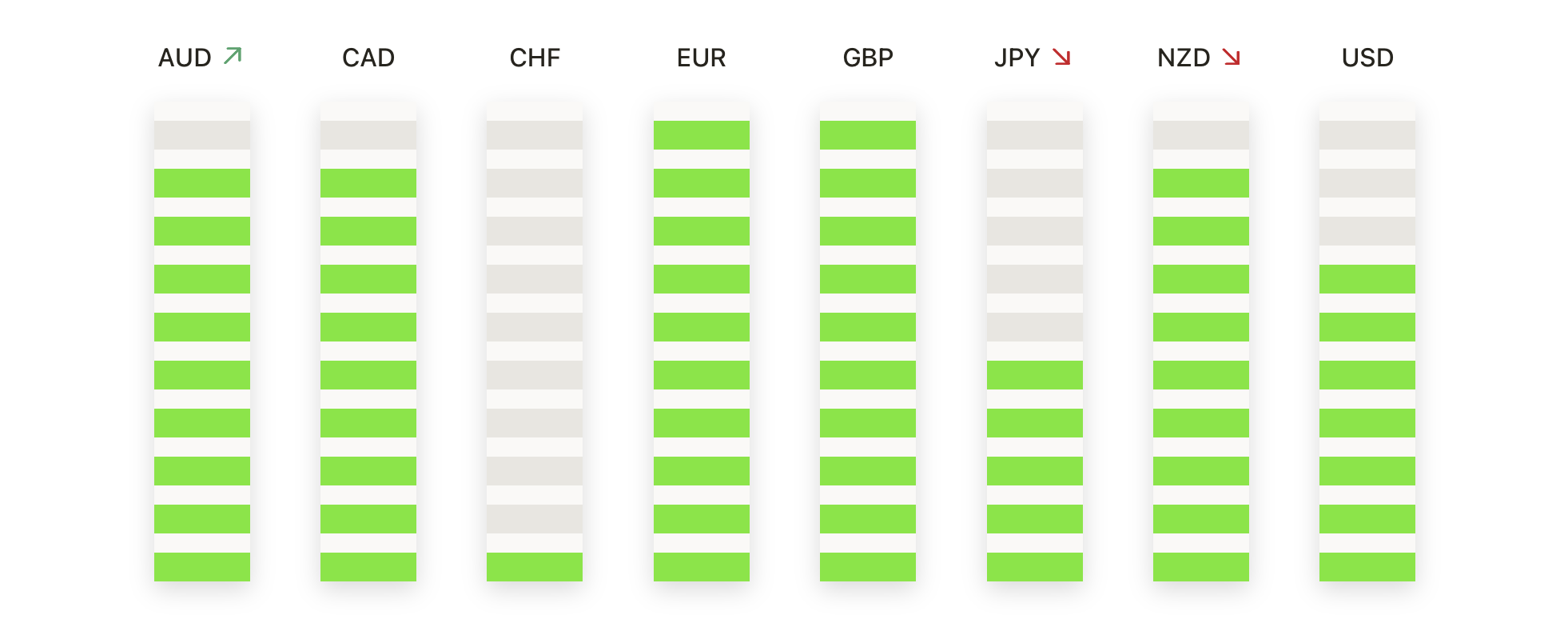
- EUR/USD Pauses after Strong Advance while Trend Remains Firm: EUR/USD ended the session at 1.1868, marginally lower by 0.02%, after trading between 1.1890 and 1.1852. The pair remains firmly supported above the 50-day SMA at 1.1751, with the 100-day at 1.1682 and the 200-day at 1.1629 continuing to slope higher, reinforcing a bullish medium-term structure. Recent price behaviour still reflects a sequence of higher highs and higher lows despite the pause. Resistance remains layered at 1.1890 and the broader swing high zone around 1.2050. Initial downside protection sits at 1.1852, with stronger dynamic support expected near the 100-day average. As long as price remains above the moving-average cluster, pullbacks continue to look corrective rather than trend-changing.
- GBP/USD Trades Sideways after Sharp February Reversal: GBP/USD closed at 1.3619, down 0.07%, following a contained session that saw a high of 1.3671 and a low of 1.3604. Price remains above the 50-day SMA at 1.3501, which continues to act as an important medium-term reference point, while the 100-day and 200-day averages at 1.3385 and 1.3435 remain relatively flat. The loss of upside momentum suggests buyers are more cautious at current levels. Immediate resistance remains at 1.3671, followed by the prior swing high zone. On the downside, a break below 1.3604 would increase pressure toward the 50-day average, while holding above it keeps the broader structure intact.
- USD/JPY Extends Decline as Bearish Momentum Builds: USD/JPY closed at 152.75, down 0.30%, after trading between 153.75 and 152.26. The pair continues to unwind from its early-February highs, with selling pressure keeping price below the 50-day SMA at 158.15 and the 100-day SMA at 154.50. While the 200-day average at 150.41 remains below price, it is increasingly becoming the key medium-term support level. The recent decline has disrupted the prior bullish structure that dominated late 2025 and early 2026. Resistance remains firm at 153.75 and near the 100-day average. A sustained break below the 200-day average would significantly strengthen the bearish case and open the door to a deeper retracement.
- Gold Sees Aggressive Correction after Explosive Rally: Gold ended the session at $4,915, down 3.33%, after a wide range between $5,100 and $4,879. The sharp sell-off reflects heavy profit-taking following the metal’s explosive advance to record highs earlier in February. Despite the magnitude of the pullback, gold remains well above its rising 50-day SMA at $4,602, with the 100-day at $4,316 and the 200-day at $3,847 reinforcing the longer-term bullish trend. Resistance is now defined at $5,100 and the recent peak near $5,400. Initial support is located at $4,879, with stronger trend support expected near the 50-day average if selling persists.
- Silver Suffers Violent Sell-Off as Momentum Reverses: Silver collapsed to $74.69, down 11.36%, after plunging from a session high of $84.94 to a low of $74.43. The move marked a decisive breakdown below the 50-day SMA at $78.70, signalling a sharp deterioration in short-term momentum following an aggressive rally to multi-year highs earlier this year. Despite the severity of the decline, price remains above the 100-day SMA at $64.07 and the 200-day at $50.47, keeping the medium- and long-term bullish structure technically intact. Resistance is now concentrated near the former 50-day average and the $84.94 high. Immediate support sits at $74.43, with the 100-day average emerging as the next major downside level if selling pressure continues.
Market Movers:
- Crocs Surges on Robust Earnings Guidance: Shares of the footwear manufacturer climbed 19% after the company issued a full-year profit outlook that exceeded analyst expectations.
- Cisco Systems Tumbles as Chip Costs Weigh on Outlook: The networking giant dropped 12% as rising component costs for memory chips are expected to pressure profit margins in the coming quarters.
- AppLovin Slides Despite Exceeding Quarterly Estimates: The mobile technology firm plummeted 19%, extending its year-to-date decline to 44% despite reporting top and bottom-line results that beat Wall Street forecasts.
- Equinix Climbs on Optimistic Full-Year Projections: Shares of the digital infrastructure provider rose 10% after the company raised its annual revenue and earnings guidance above consensus estimates.
Thursday’s session marked a decisive shift in market sentiment, with artificial intelligence moving from a source of enthusiasm to a focal point of risk. As investors reassess the economic and earnings implications of rapid technological change, volatility remains elevated across equities, commodities, and currencies. With inflation data looming, markets are likely to remain cautious, favouring defensive positioning until clearer signals emerge.