Wall Street launched the second half of 2025 with mixed results on Tuesday as investors rotated away from high-flying technology stocks and turned instead to defensive healthcare shares. The Dow Jones Industrial Average soared more than 400 points on strong gains from companies like Amgen and UnitedHealth, while the S&P 500 finished near flat and the Nasdaq dropped. Market participants also weighed the Senate’s narrow passage of President Trump’s sweeping tax and spending bill, alongside Federal Reserve Chair Jerome Powell’s comments on tariffs and rates. Oil prices steadied ahead of OPEC+ meeting, and Treasury yields ticked higher as traders braced for key jobs data later this week.
Key Takeaways:
- Dow Rallies on Healthcare Rotation: The Dow Jones Industrial Average jumped 400.17 points, or 0.91%, to finish at 44,494.94 as investors moved out of technology and rotated into defensive healthcare names. Amgen and UnitedHealth surged more than 4%, while Merck and Johnson & Johnson also lifted the index.
- S&P 500 Ends Little Changed: The S&P 500 edged down 0.11% to close at 6,198.01 after traders took some profits from high-performing technology stocks. Despite the soft start, the index ended the second quarter with a robust gain of more than 10%.
- Nasdaq Drops as Tech Retreats: The Nasdaq Composite fell 0.82% to settle at 20,202.89, weighed down by weakness in Nvidia, Microsoft, and Tesla. Chipmakers broadly retreated after their sharp second-quarter surge, with traders suggesting that a pause in speculative growth names could be healthy following big gains in AI-linked shares.
- European Markets Weaken Amid ECB Forum: European equities finished broadly lower on Tuesday as investors tracked the European Central Bank’s forum in Sintra and digested mixed inflation data. The Stoxx 600 fell 0.21% to 540.26, while the DAX lost 0.99% and the FTSE MIB in Milan shed 0.58%. France’s CAC 40 closed flat, while the UK’s FTSE 100 gained 0.28% to 8,785.33 thanks to modest improvements in its manufacturing PMI, which rose for a third month to 47.7 in June but remained in contraction. Eurozone CPI advanced to 2.0% as expected, while core CPI held steady at 2.3%. German unemployment came in better than forecasts, holding at 6.3%, while inflation expectations on the ECB’s one- and three-year surveys eased slightly, providing some comfort to rate-setters.
- Asia-Pacific Markets Mixed on Tariff Uncertainty: Asia-Pacific equities saw a mixed finish as traders weighed the looming expiry of President Trump’s 90-day tariff reprieve against Wall Street’s earlier rally. China’s CSI 300 rose 0.17% after a positive manufacturing PMI at 50.4 beat expectations. Japan’s Nikkei retreated 1.24% after hitting an 11-month high on Monday, while the broader Topix fell 0.73%. South Korea’s Kospi added 0.58% on steady online spending growth, while Australia’s ASX 200 closed flat. Indian markets were little changed, and Hong Kong remained closed for a holiday. Officials in Washington warned tariffs could snap back to higher levels if trade talks do not progress, adding to caution.
- Oil Holds Steady Ahead of OPEC+ Meeting: Oil prices finished steady as traders looked ahead to the 6 July OPEC+ meeting, where members are expected to announce a 411,000-barrel-per-day hike for August. Brent crude rose 0.65% to $67.39 a barrel, while WTI climbed 0.95% to $65.73. Expectations of improving global trade conditions helped support demand prospects, partly offsetting worries over a supply boost. Analysts expect OPEC+ to continue gradual monthly hikes through the summer to meet recovering consumption.
- Treasury Yields Edge Higher on Spending Bill News: The 10-year Treasury yield climbed more than 2 basis points to 4.248% after the Senate narrowly passed Trump’s tax and spending package. Federal Reserve Chair Jerome Powell noted tariffs had forced the central bank to pause rate cuts despite weaker growth, highlighting a tricky policy environment.
- US Manufacturing Remains Subdued: American factory activity remained stuck in contraction in June, with the ISM manufacturing PMI at 49.0 for a second consecutive month below the growth threshold. Tariffs continued to create supply chain bottlenecks, while input prices stayed high, with the prices-paid index climbing to 69.7. Supplier delivery times improved slightly but remained historically slow, underlining the drag on manufacturing from trade policy uncertainty.
FX Today:
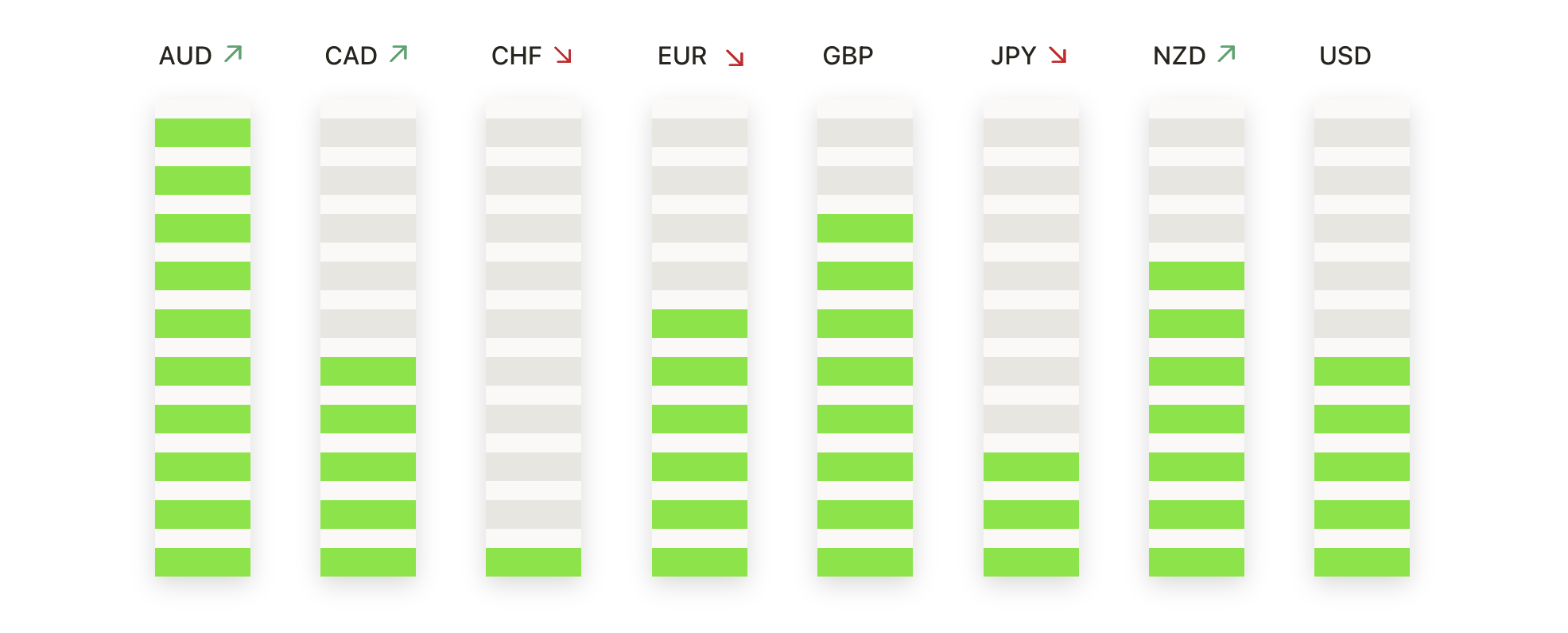
- EUR/USD Holds Gains Above 1.1790: The EUR/USD pair closed at 1.1793 on Tuesday, gaining 0.05% after moving within a narrow daily range of 1.1766 to 1.1826, finishing with a modest bullish candle near the session high. Price action continued to respect a rising pattern of higher lows and higher highs since the March breakout, with strong technical support from the 50-day SMA at 1.1402, the 100-day at 1.1179, and the 200-day at 1.0862. Momentum indicators remain steady and confirm a healthy uptrend bias. The next resistance sits around 1.1850, which aligns with a psychological barrier before a possible extension toward 1.2000. On the downside, initial support is clustered near 1.1700, followed by stronger protection around 1.1600 and 1.1500, which should attract buyers on any larger retracement.
- GBP/USD Maintains Firm Tone Near 1.3740: The GBP/USD pair settled at 1.3742, rising 0.05% after marking a daily high of 1.3789 and a low of 1.3703. Technically, the pair remains anchored above its 50-day SMA at 1.3453, supported further by the 100-day SMA at 1.3171 and the 200-day at 1.2947, with all averages trending higher. The price structure shows consistent higher lows and higher highs inside a clear ascending channel since March. Immediate resistance stands at 1.3800, with a break higher potentially targeting the psychological 1.4000 zone. If sellers push back, the pair is likely to find first support near 1.3550, while deeper pullbacks could stabilise closer to 1.3400, where the channel and moving averages converge.
- USD/CAD Struggles Near 1.3700 Barrier: USD/CAD closed at 1.3642 on Tuesday, up 0.30% after a session range between 1.3599 and 1.3666, finishing with a small bullish candle that lacked enough conviction to challenge the 1.3700 barrier. Price action has consistently respected a bearish sequence of lower highs and lower lows since peaking in April, with the 50-day SMA now overhead at 1.3776, alongside the 100-day at 1.3999 and the 200-day at 1.4033, all sloping downward. Bears have repeatedly defended the 1.3700–1.3750 resistance zone on rebounds. If selling pressure resumes, the pair could retest support around 1.3500, with a deeper cushion expected closer to 1.3400 where prior consolidation zones held. A decisive break above 1.3800 would be required to meaningfully shift the bearish market structure.
- USD/JPY Slips Below 144.00: The USD/JPY pair ended at 143.73, down 0.17% after swinging between 144.04 and 142.67. Price has now closed below the 50-day SMA at 144.41, while the 100-day and 200-day SMAs rest higher at 146.29 and 149.53 respectively, reinforcing a longer-term bearish bias. Since peaking in March, the pair has produced a well-defined pattern of lower highs and lower lows, adding to downside pressure. Immediate support emerges around 143.00, with stronger demand near 141.50, an area that previously acted as a rebound zone. If that breaks, the path could open for further weakness toward the 140.00 psychological threshold.
- Gold Extends Rally Above $3,330: Gold finished Tuesday at $3,337, gaining 1.04% after trading in a range between $3,302 and $3,358, closing with a solid bullish candle near the top of the session. The metal continues to respect an uptrend structure marked by higher lows since March, supported by the 50-day SMA at $3,322, the 100-day at $3,163, and the 200-day at $2,917, all maintaining positive slopes. Buyers defended dips strongly through early trade, keeping momentum in place as the price pushes further above key averages. Immediate resistance is seen around $3,400, with a move above potentially exposing the $3,500 mark, while first support is likely to hold around $3,300. If a larger pullback develops, the $3,250 zone remains the next key defence before any deeper correction unfolds.
Market Movers:
- Tesla Slides on Subsidy Threat: Tesla fell more than 5% after President Trump suggested a review of subsidies for Elon Musk’s companies, raising fears that key regulatory credits could disappear and impact up to 40% of profits.
- Diabetes Device Makers Drop on Payment Changes: Tandem Diabetes Care fell more than 7%, while Insulet and Dexcom each lost over 4% after new government proposals for a competitive bidding programme raised pricing concerns.
- AeroVironment Sinks on Funding News: AeroVironment plunged over 11% after announcing a $750 million share offering and $600 million in convertible notes.
- Dyne Therapeutics Drops After Discounted Offering: Dyne Therapeutics slid more than 8% after pricing its new share offering below the prior close, raising concerns over weaker demand.
- Macau Casino Operators Rally on Strong Gaming Data: Las Vegas Sands and Wynn Resorts each surged more than 8%, with MGM up over 7% after June gaming revenue in Macau jumped 19% year on year, beating expectations.
- Packaging Corporation of America Climbs on Deal: Packaging Corporation of America rose over 7% after agreeing to buy Greif Containerboard for $1.8 billion.
Tuesday’s session showcased a decisive investor move away from speculative technology trades and back into safer sectors like healthcare, powering the Dow higher while the S&P 500 and Nasdaq struggled to advance. The market also digested fresh policy signals from Trump’s spending bill and Powell’s tariff remarks, which continued to sway rate expectations. Steadier oil prices and a slight rise in Treasury yields added to the cautious but stabilising tone. With the all-important jobs data due later this week and OPEC+ preparing its next output move, traders are likely to see more choppy trading as the second half of the year takes shape.