
A rebound in equities on Monday followed a sharp sell-off last week, as investors responded to a dip in oil prices and reports suggesting Iran may be open to a ceasefire. While the gains were broad, including travel and semiconductor stocks, the underlying conflict in the Middle East continued with fresh attacks on energy infrastructure. Despite mounting geopolitical risks, markets appeared to take comfort in tentative diplomatic signals, raising questions about whether traders are underestimating the potential for escalation. With the Federal Reserve’s policy meeting approaching, sentiment remains fragile and vulnerable to renewed shocks.
Key Takeaways:
- Dow Rebounds but Risks Remain Elevated: The Dow Jones Industrial Average rose 317.30 points, or 0.75%, to close at 42,515.09, recovering a portion of Friday’s 700-point drop. The move reflected some relief in energy prices and geopolitical signals.
- S&P 500 and Nasdaq Lead Gains: The S&P 500 climbed 0.94% to 6,033.11, while the Nasdaq surged 1.52% to 19,701.21. Tech stocks broadly outperformed, aided by strong gains in chipmakers and communication names like Meta and Roku.
- Europe Edges Higher Despite Middle East Tensions: European stocks ended modestly higher, with the Stoxx Europe 600 up 0.4% as investors assessed escalating Israel-Iran attacks alongside regional economic data. The FTSE 100 added 0.28%, while France’s CAC 40 and Germany’s DAX each gained around 0.8%. Italy’s FTSE MIB rose 1.24%. Eurostat reported Q1 hourly labour costs rose 3.4% in the euro area, while Italy’s annual inflation slowed to 1.6% in May. Renault tumbled over 8%, but strong performances from Kering and BNP Paribas helped offset losses.
- Asia-Pacific Markets Advance Despite Tensions and Mixed China Data: Equity markets across the Asia-Pacific region rose on Monday as traders balanced ongoing Israel-Iran conflict headlines with fresh macroeconomic figures from China. Mainland China’s CSI 300 closed up 0.25% at 3,873.80, supported by a 6.4% year-on-year jump in May retail sales, though industrial output slowed to 5.8%, tempering sentiment. Hong Kong’s Hang Seng Index climbed 0.7%, led by consumer tech and real estate stocks. In Japan, the Nikkei 225 surged 1.26%, while the broader Topix index gained 0.75%, reflecting firm earnings in auto and banking sectors. South Korea’s Kospi index rallied 1.8%, while the small-cap Kosdaq rose 1.09%, with both indices benefiting from a rebound in chipmakers and strong foreign inflows. Australia’s S&P/ASX 200 was flat at 8,548.40 amid weakness in materials and utilities, while India’s Nifty 50 and BSE Sensex gained 0.92% and 0.84% respectively, extending their recent run on firm domestic demand signals.
- Oil Falls After Ceasefire Reports Emerge: West Texas Intermediate crude declined 1.66% to settle at $71.77, while Brent slipped 1.35% to $73.23. Prices retreated from overnight highs above $77 after reports that Iran asked regional powers to pressure Israel into a ceasefire. Despite continued attacks and threats to the Strait of Hormuz, traders recalibrated risk expectations, with some doubting a near-term break above $80 per barrel.
- Yields Tick Higher as Fed Meeting Nears: US Treasury yields moved slightly higher, with the 10-year rising over 3 basis points to 4.456% and the 2-year edging up to 3.973%. The moves reflected continued geopolitical unease and incoming economic data, while futures markets maintained a nearly 100% probability of the Fed holding rates steady at Wednesday’s meeting.
- Empire State Survey Sinks Deeper into Contraction: Factory activity in New York fell sharply in June, with the Empire State Manufacturing Survey slipping to -16 from -9, worse than the expected -6. It marked the fourth straight negative reading, with declines in new orders, shipments, and inventories. However, expectations for future conditions improved significantly, with the outlook index rising to 21.2 from -2 in May, pointing to cautious optimism among business leaders despite current weakness.
FX Today:
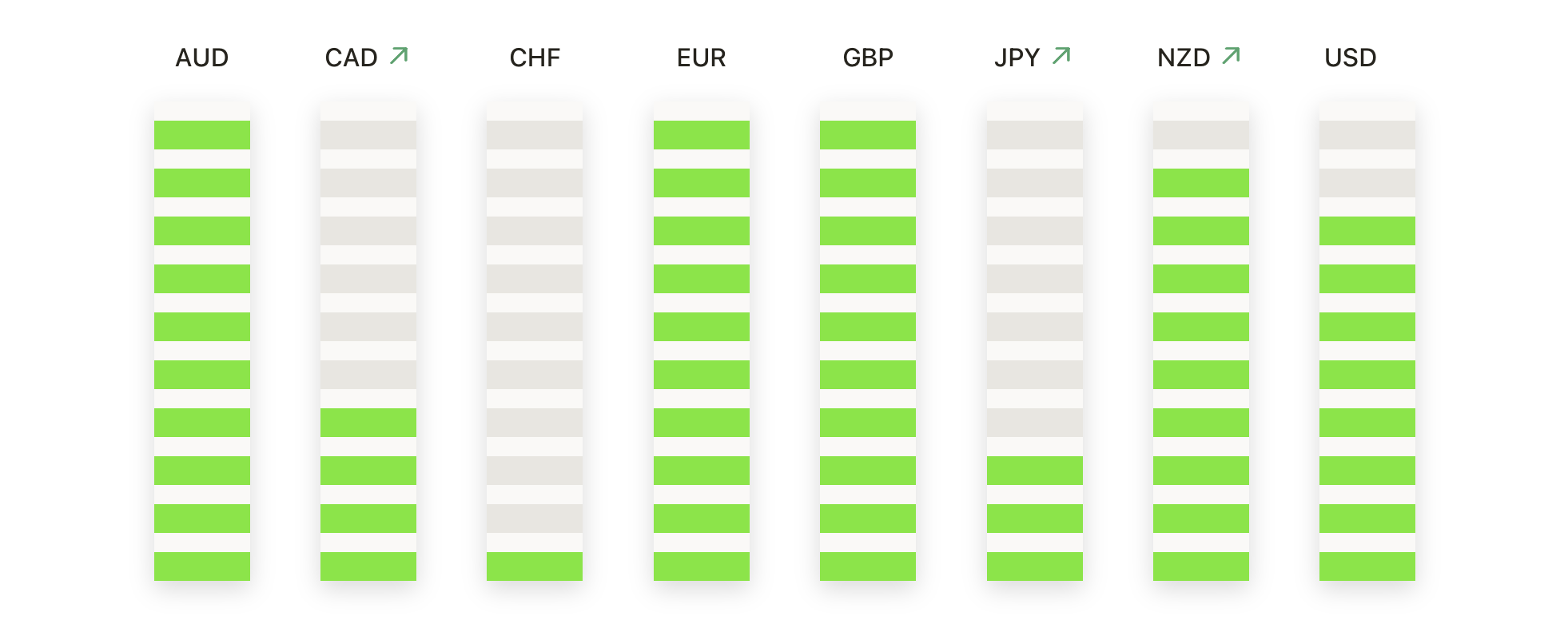
- EUR/USD Reverses after Reaching New Highs: The EUR/USD pair closed at 1.1565 on Monday, declining 0.24% after reaching an intraday high of 1.1614. The daily candle formed a long upper wick, indicating a failed breakout attempt above the 1.1600 barrier. Price dropped to a low of 1.1512 before recovering modestly, suggesting support near the 1.1500 level remains active for now. Despite the setback, the pair still trades above its 50-day SMA at 1.1457, while the 100-day and 200-day SMAs at 1.1390 and 1.1254 remain below current levels and point upward. The structure remains bullish overall, but fading momentum near key resistance raises the risk of a short-term pullback. Continued rejection from 1.1600 could prompt a deeper retracement toward the 1.1480–1.1500 zone, while a confirmed daily close above 1.1620 would be needed to open a path toward 1.1700.
- GBP/USD Consolidates beneath Resistance: The GBP/USD pair settled at 1.3574 on Monday, rising 0.04% after ranging between 1.3534 and 1.3622. Price printed a small-bodied candle with upper and lower shadows, reflecting ongoing indecision after several failed attempts to close above the 1.3600 threshold. This level has rejected price action for seven consecutive sessions despite a 1,000-pip rally from April lows. The pair remains firmly above its 50-day SMA at 1.3354, while the 100-day and 200-day SMAs at 1.3043 and 1.2922 continue to slope upward, confirming a strong uptrend. However, momentum has stalled, and repeated rejection near 1.3620 may result in a short-term pullback if buyers fail to regain control. Immediate support lies near 1.3500, with a break below exposing 1.3420 and the 50-day average. To unlock further gains, bulls need a daily close above 1.3620, which would clear the path toward 1.3750.
- USD/JPY Rebounds but Faces Pressure at 145.00: The USD/JPY pair ended Monday at 144.86, advancing 0.54% after trading between 143.65 and 144.88. Price printed a strong bullish candle that reclaimed the 50-day SMA at 144.06 and closed just below the psychologically important 145.00 level. This marked the sharpest gain in over two weeks and built on Friday’s recovery from near 143.00, where buying interest appears to be emerging. Despite the bounce, the pair remains below its 100-day and 200-day SMAs at 147.24 and 149.38, and no breakout has occurred from the corrective structure that’s defined recent price action. Resistance between 145.00 and 145.50 has capped upside repeatedly this month and must be breached to enable further gains toward 147.00 and 148.20. On the downside, 143.00 remains key initial support, followed by the swing low near 141.80.
- AUD/USD Pushes Higher but Lacks Breakout beyond 0.6555: The AUD/USD pair settled at 0.6522 on Monday, rising 0.57% after trading between 0.6466 and 0.6552. Price printed a solid bullish candle near the upper end of its daily range, continuing a steady climb that began in mid-April. This marks the fourth time this month the pair has approached the 0.6555 barrier, but once again failed to close above it. The structure remains bullish, with price firmly above the 50-day SMA at 0.6412 and the 100-day and 200-day SMAs at 0.6349 and 0.6432 respectively. The pattern of higher lows and shallow retracements reflects sustained buying interest, though fading momentum near resistance suggests bulls need stronger conviction to trigger a breakout. A daily close above 0.6555 would expose 0.6650, while downside risk is limited unless price breaks below 0.6410.
- Gold Falls Sharply after Third Rejection near $3,450: Gold closed at $3,384 on Monday, dropping 1.44% after trading between $3,383 and $3,453. The session printed a large bearish candle with a long upper shadow, reflecting a clear rejection from the $3,450 resistance zone for the third time since late May. Despite the setback, gold remains above its 50-day SMA at $3,287, while the 100-day and 200-day averages at $3,108 and $2,876 continue to trend higher. Immediate support is now seen at $3,350, followed by stronger footing near $3,300, which has held since early June. A drop below $3,300 would expose $3,250 and raise the risk of a deeper correction. On the upside, bulls need to reclaim $3,420 and close above $3,450 to reset momentum.
Market Movers:
- AMD Leads Semiconductor Rally with 8% Surge: Advanced Micro Devices jumped more than 8% to top the Nasdaq 100 as chipmakers rallied sharply on Monday. The rebound followed Friday’s tech-led sell-off and coincided with renewed demand for growth stocks.
- Roku Soars on Amazon Advertising Partnership: Roku shares gained over 10% after announcing a deal with Amazon that will expand ad targeting via Amazon’s DSP tool, giving marketers access to more than 80% of US households with connected TV.
- Sage Therapeutics Jumps on Acquisition News: Sage Therapeutics surged more than 35% after agreeing to be acquired by Supernus in a deal worth up to $12 per share, boosting sentiment in the biotech space and driving speculative interest in small-cap names.
- Sarepta Plunges over 40% on Safety Concerns: Sarepta Therapeutics collapsed more than 42% after analysts at BMO and Piper Sandler downgraded the stock due to reports of a second patient death linked to its gene therapy, raising questions about trial safety.
Monday’s rebound helped the major indices recover some of Friday’s steep losses, but the backdrop remains fragile as the Israel-Iran conflict continues with no resolution in sight. While oil prices eased and risk appetite improved, the underlying threat to energy supply routes and global stability persists. Traders welcomed signals that Iran may be open to a ceasefire, yet the four-day escalation and fresh attacks on infrastructure suggest tensions could quickly reignite. With the Federal Reserve’s policy decision due on Wednesday, attention will now turn to whether policymakers acknowledge geopolitical risks or remain focused on inflation and labour data. For now, volatility is likely to stay elevated as markets assess headlines, positioning, and central bank tone in the days ahead.