
Markets retreated on Friday as escalating trade tensions rattled investor confidence, snapping a strong rally from the previous session. The Dow dropped nearly 280 points, while both the S&P 500 and Nasdaq slipped into weekly losses following President Trump’s announcement of a 35% tariff on Canada and threats of broader global levies. Sentiment soured further as traders awaited clarity on potential EU duties, which failed to materialise before the closing bell. A sharp swing in tone from Thursday’s record highs reflected growing concerns that the trade war may intensify. With earnings season and key inflation data looming next week, investors will be watching for signals that could either calm nerves or stoke further volatility.
Key Takeaways:
- Dow Drops Over 275 Points on Tariff Shock: The Dow Jones Industrial Average fell 279.13 points, or 0.63%, to close at 44,371.51 on Friday, reversing Thursday’s strong gain. The index registered a 1% weekly decline, weighed down by rising geopolitical tension after Trump’s aggressive tariff announcement on Canada.
- S&P 500 Pulls Back After Record High: The S&P 500 lost 0.33% to settle at 6,259.75, ending the week with a 0.3% loss. The decline followed Thursday’s fresh record high and marked a cautious turn in sentiment. The S&P had rallied earlier in the week as investors shrugged off copper tariffs, but Friday’s mood shifted decisively.
- Nasdaq Eases Amid Caution and Profit-Taking: The Nasdaq Composite dipped 0.22% to finish at 20,585.53, trimming its weekly performance to a marginal 0.1% loss. Gains in key tech names earlier in the week faded slightly as traders booked profits ahead of the earnings season.
- European Stocks Fall as Tariff Risks Mount: The Stoxx Europe 600 dropped 1.1% to 547.35 as regional markets reacted to looming US-EU tariff concerns. Germany’s DAX declined 0.82%, while France’s CAC 40 fell 0.5%, ending a four-day rally. Italy’s FTSE MIB tumbled 1.11% amid heightened political and inflation worries. UK markets outperformed, with the FTSE 100 rising 1.34% for the week, supported by miners. Revised French CPI rose 0.9% y/y in June, adding pressure on the ECB’s rate outlook, while Germany’s projected debt surge raised long-term fiscal questions. No EU tariff letter was released during the session, leaving markets in suspense.
- Asia Mixed as Canada Tariffs Cloud Regional Outlook: Asia-Pacific markets delivered a mixed performance on Friday as investors reacted to President Trump’s 35% tariff on Canada and assessed regional trade and commodity developments. Japan’s Nikkei 225 slipped 0.19%, while the broader Topix index rose 0.39%, helped by gains in defensives. In South Korea, the Kospi fell 0.23% and the Kosdaq gained 0.35%. Institutional and foreign investors were net sellers, while individual traders supported the market. South Korea’s exports rose 9.5% in the first 10 days of July to $19.4 billion, while imports increased just 1.8%, leaving a $594 million trade deficit. Australia’s ASX 200 declined 0.11%, but major mining stocks rallied on the back of the US’s 50% tariff on copper. Rio Tinto climbed 2.28%, Fortescue rose 2.85%, and BHP advanced 2.77%. Chinese equities edged higher, with the CSI 300 up 0.12% and the Hang Seng Index gaining 0.5%, supported by strength in Hong Kong-listed mainland enterprises. The Hang Seng China Enterprises Index rose 0.2% as investors rotated into value stocks.
- UK GDP Contracts Again as Growth Worries Deepen: UK GDP shrank by 0.1% in May, defying expectations of a small rebound and marking a second straight monthly contraction. Output declined across industrial production and construction, exacerbated by new tariffs and business uncertainty. April’s 0.3% decline was followed by a weaker-than-expected May print, complicating the government’s economic agenda.
- Oil Rallies Over 2% on Tight Market Talk and Sanction Risks: Brent crude surged $1.99, or 2.90%, to $70.63 a barrel, while WTI climbed $2.11, or 3.17%, to $68.68. For the week, Brent gained 3% and WTI 2.2%. The IEA warned of underestimated tightness in the prompt market, while US tariffs and potential sanctions on Russia added upside risk. Short-term fundamentals remain constructive with falling rig counts and strong summer refinery demand, though the IEA still projects a surplus later this year. OPEC+ continues to enforce production discipline, but long-term demand risks persist, particularly from China.
- Treasury Yields Rise as Trade Friction Intensifies: US Treasury yields rose on Friday, led by longer maturities. The 10-year yield jumped 7 basis points to 4.417%, while the 30-year climbed 9 bps to 4.954%. The 2-year yield edged up to 3.889%, a 2-basis-point move. Bond markets responded to increased uncertainty and inflation concerns linked to the new 35% Canadian tariffs and Trump’s broader trade rhetoric.
FX Today:
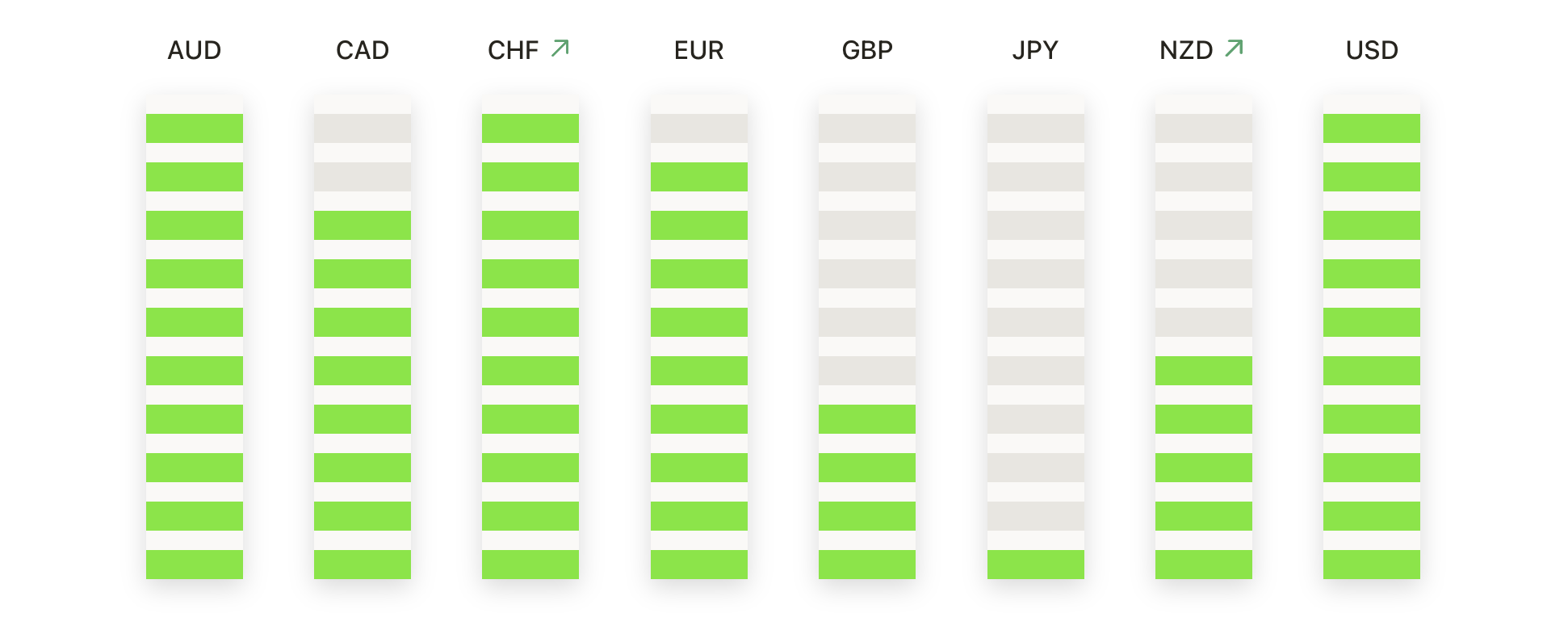
- EUR/USD Slips Again After Failing to Reclaim 1.1700: EUR/USD ended the week at 1.1688, easing 0.10% and extending its losing streak to four consecutive sessions. The pair reached an intraday high of 1.1714 but failed to sustain upward momentum, closing well below the 1.1700 threshold. Price action suggests that the bullish trend may be entering a corrective phase, though the broader structure remains constructive while above the 50-day SMA at 1.1464. Lower highs and weaker closes raise the risk of a deeper pullback, potentially toward 1.1600 or even 1.1550. To regain upward momentum, the pair must close back above 1.1720.
- GBP/USD Falls Below 1.3500 as Selling Accelerates: GBP/USD settled at 1.3498 on Friday, down 0.61% on the day after failing to hold above the key 1.3500 psychological level. The pair opened at 1.3577 and reached a high of 1.3586 before reversing sharply and touching a low of 1.3481. Friday’s large red candle marked the third straight daily loss and the steepest one-day drop in two weeks. The close below the 50-day SMA at 1.3496 signals increased downside risk, especially as price action has now pulled back over three cents from the June peak at 1.3820. A deeper correction remains likely unless bulls can quickly reclaim the 1.3600 level.
- USD/JPY Climbs as Bulls Confront Long-Term Resistance: USD/JPY closed at 147.37 on Friday, gaining 0.79% after rebounding from a session low of 146.13. The pair extended its upward push for July, firmly breaking above the 100-day SMA at 145.81 and marking its highest close in over a month. The bullish candle structure and sequence of higher lows suggest near-term momentum remains with buyers. However, the pair now faces significant resistance near the descending 200-day SMA at 149.59, a level that has previously capped upward attempts. Despite the short-term strength, the longer-term trend remains mixed, and unless a clean break above 150.00 is achieved, USD/JPY risks a pullback toward 145.00. The current setup leaves the pair at a decisive inflection point heading into next week.
- EUR/GBP Pushes to Four-Month High as Breakout Continues: EUR/GBP closed at 0.8659 on Friday, gaining 0.53% for its highest close since early March. The pair advanced steadily from a low of 0.8606 and briefly touched 0.8667, extending a three-day winning streak that lifted it decisively above its prior June range. The former resistance zone around 0.8600 now acts as support, with no major barriers until the 0.8700 level. Moving averages across all key timeframes have turned higher, reinforcing the bullish structure. If momentum persists, a break above 0.8700 would confirm a broader trend continuation, while any dip is likely to find support in the 0.8600-0.8580 zone.
- Gold Rebounds as Buyers Defend $3,320 Support: Gold settled at $3,353 on Friday, advancing 0.91% after bouncing from a low of $3,322. The bullish daily candle follows a week of sideways action and confirms that buyers continue to protect the $3,320-$3,300 zone. That level also coincides with the 50-day SMA, which remains on a steady upward slope. The intraday high of $3,368 marked the strongest weekly close and suggests growing bullish momentum. Although the metal continues to struggle near the $3,400 ceiling, the long-term trend remains intact with higher support levels forming. A close above $3,380 would open the path toward April and May highs, while the broader range between $3,300 and $3,400 continues to dominate price action.
Market Movers:
- Bitcoin Surge Lifts Crypto Stocks: MicroStrategy (MSTR) rallied more than 3% after Bitcoin surged over 3% to a fresh record high. Sentiment around crypto-related equities improved sharply as digital assets extended their multi-week rally.
- Drone Stocks Jump on Pentagon Orders: Red Cat Holdings (RCAT) soared more than 25%, Kratos Defence (KTOS) gained over 11%, and AeroVironment (AVAV) rose more than 10% after the US Defence Secretary ordered increased drone production and deployment.
- Airline Shares Slide After Thursday’s Bounce: American Airlines (AAL) fell over 5%, United Airlines (UAL) dropped more than 4%, and Alaska Air (ALK) lost over 3%, giving back part of Thursday’s tariff-driven rally. Delta Air Lines (DAL) eased 0.25% after its sharp 12% surge in the previous session.
- Capricor Therapeutics Crashes After FDA Setback: Capricor (CAPR) plunged 33% after the FDA declined to approve its treatment candidate for Duchenne muscular dystrophy-linked heart disease, dealing a major blow to investor expectations.
- Levi Strauss Rallies on Strong Results and Guidance: Levi Strauss (LEVI) jumped more than 11% after reporting Q2 revenue of $1.45 billion, beating expectations of $1.37 billion.
With markets now digesting a sharp escalation in global trade friction, attention turns to the corporate and macro landscape for clarity. The second-quarter earnings season kicks off next week, offering a critical gauge of how companies are navigating tariffs, inflation, and weaker demand signals. At the same time, key inflation reports will test market expectations around central bank policy direction. After a volatile week shaped by political headlines, investors are bracing for fundamental data to reclaim centre stage as the dominant driver of sentiment.