Confusion over US trade policy kept markets unsettled on Tuesday after President Trump confirmed a 1 August deadline for sweeping new tariffs. Stocks struggled for direction, with the S&P 500 ending flat, the Dow falling, and the Nasdaq barely higher. A surprise 50% tariff on copper imports sent prices soaring, while mixed performance across sectors reflected investor caution. Gains in chipmakers and oil names helped limit losses, but pressure on bank shares and lack of clarity over tariff details held back broader momentum. Traders are watching for updates that could shape how these trade measures impact earnings and global growth.
Key Takeaways:
- S&P 500 Hovers Near Flatline as Traders Eye Trade Uncertainty: The S&P 500 edged down 0.07% to 6,225.52 on Tuesday, with investors caught between tariff headlines and earnings optimism. While key sectors like semiconductors and energy showed strength, broad market participation remained muted.
- Nasdaq Inches Higher as Chip Stocks Rally: The Nasdaq Composite rose 0.03% to close at 20,418.46, supported by a rally in chipmakers. Intel surged more than 7%, while GlobalFoundries and ON Semiconductor gained over 5%, helping tech offset weakness elsewhere.
- Dow Slides as Banks Weigh on Blue Chips: The Dow Jones Industrial Average fell 165.60 points, or 0.37%, to finish at 44,240.76. Financials dragged the index lower after HSBC cut its outlook on major US lenders. JPMorgan and Bank of America each dropped 3%, while Goldman Sachs shed nearly 2%.
- European Stocks Climb on Trade Deal Hopes and Sector Resilience: European indices closed solidly higher on Tuesday, with optimism rising over a potential trade agreement between Brussels and Washington. The Eurozone’s STOXX 50 gained 0.5% to 5,370, and the STOXX 600 rose 0.4% to 545. Germany’s DAX advanced 0.55% to 24,206.91, while France’s CAC 40 added 0.6%, recovering to a near one-month high. The FTSE 100 climbed 0.54% to 8,854.18 as tariff exemptions buoyed export-heavy shares. Italy’s FTSE MIB gained 0.5%, helped by a 1.9% rise in UniCredit. Auto makers led gains as European producers are expected to benefit from rising tariffs on Asian competitors. However, trade data showed German exports to the US fell 7.7% in May, underlining the volatility in transatlantic trade flows.
- Asia-Pacific Markets Mixed as Traders React to Steep Tariff Threats: Asian equities delivered a mixed performance as investors digested a wave of new US tariffs targeting 14 countries. South Korea’s Kospi jumped 1.81%, with support from tech and manufacturing stocks. China’s CSI 300 rose 0.84% and Hong Kong’s Hang Seng climbed 1.09% to 24,148.07 as traders bet on selective resilience. In Japan, the Nikkei 225 rose 0.26% to 39,688.81 despite weak business sentiment data. The Topix gained 0.17%, with banks supported by a 2.8% annual rise in loan balances. Australia’s ASX 200 ended flat at 8,590.70 after the RBA unexpectedly held rates steady. India’s Nifty 50 rose 0.24% to 25,522.50. Despite the broad range of tariff announcements, markets remained tentative, with analysts suggesting room remains for negotiation before 1 August.
- Oil Prices Extend Gains as Supply and Tariff Risks Converge: Brent crude settled at $70.15, up 0.82%, while WTI gained 0.59% to close at $68.33, both reaching their highest levels in over two weeks. Prices were lifted by a combination of trade tensions and a larger-than-expected OPEC+ production increase of 548,000 barrels per day for August. While Asian buyers face rising US tariffs, major producers and refiners pledged to engage Washington in talks. At the same time, weak German export data signalled potential softening in energy demand, adding complexity to the supply-demand balance.
- Treasury Yields Flat as Traders Wait for Tariff Clarity: The US 10-year Treasury yield rose just 1 basis point to 4.407%, while the 2-year and 30-year yields remained steady at 3.903% and 4.93%, respectively. Markets showed minimal reaction to Monday’s flurry of tariff letters, signalling a wait-and-see approach. Although trade tensions are rising, the muted move in yields suggests investors expect room for negotiation before measures take full effect.
- Consumer Credit Growth Misses Forecasts in May: US consumer credit expanded by just $5.1 billion in May, falling short of the $11 billion estimate and sharply below April’s $10.17 billion rise. Revolving credit, including credit cards, rose at a 3.2% annual pace, while nonrevolving credit, mostly student and auto loans, rose 2.8%. The data point to cautious household behaviour as tariff and inflation uncertainties weigh on borrowing appetite.
FX Today:
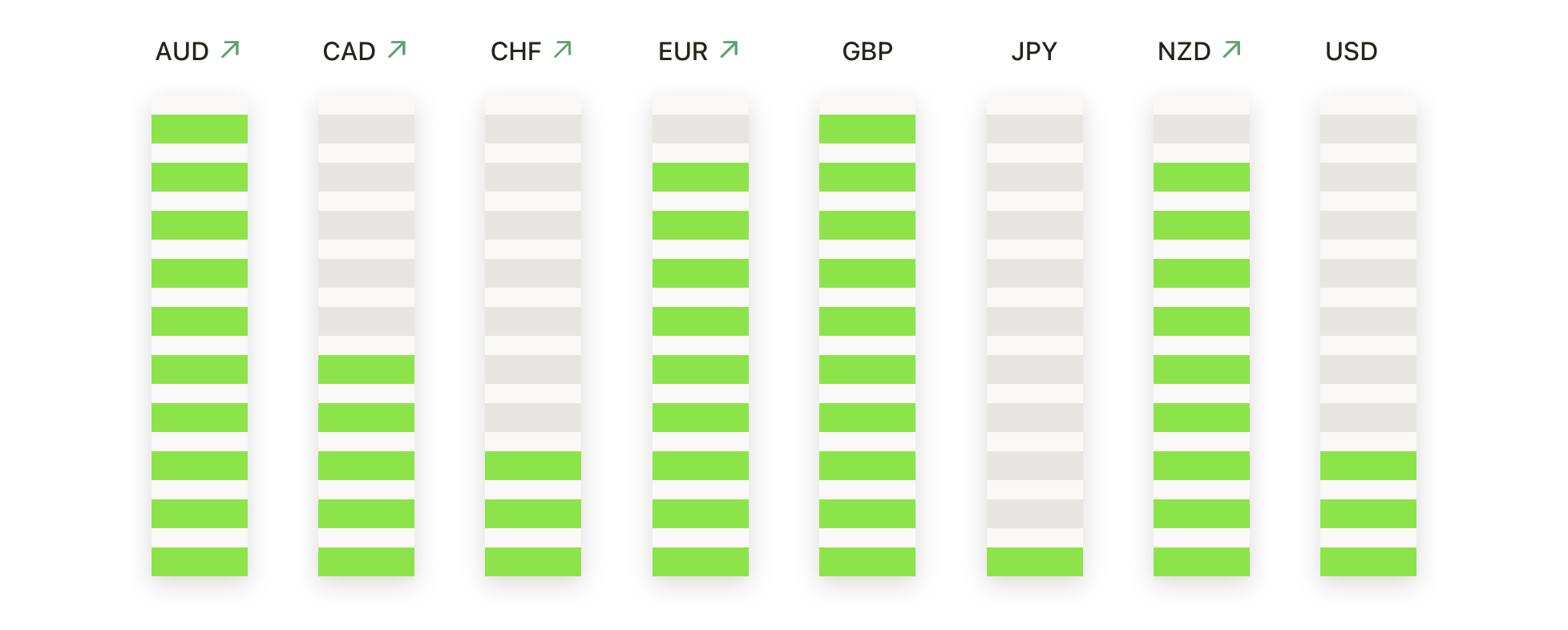
- EUR/USD Holds Above 1.1680 Despite Modest Gains: EUR/USD closed at 1.1722, up 0.13%, as bulls held control above the 1.1680 area despite limited intraday movement. The pair ranged between 1.1682 and 1.1765, printing a narrow-bodied candle with a slight upper wick, indicating subdued momentum and some resistance into the close. The trend remains firmly intact, with the 50-day SMA rising at 1.1444 and the 100-day SMA closing in from 1.1183. As long as the pair remains above the 1.1620 support and the ascending trendline from early May, the technical bias stays bullish. A close above 1.1870 would confirm continuation and expose the psychological 1.2000 level.
- GBP/USD Holds Bullish Structure While Below Key Resistance: GBP/USD ended Tuesday at 1.3588, down 0.10%, as the pair failed to maintain early strength after reaching a high of 1.3646. The broader uptrend remains well-supported by a rising 50-day SMA at 1.3481, while the 100-day and 200-day SMAs at 1.3224 and 1.2953 remain far below. Price continues to consolidate above 1.3500, indicating a healthy pause within the trend. Resistance remains at the 1.3700- 1.3780 zone, with a daily close above that range needed to reignite upside momentum toward 1.3850 or 1.4000. A close below 1.3480 would suggest a deeper retracement targeting 1.3350.
- USD/JPY Clears 100-Day SMA to Strengthen Bullish Momentum: USD/JPY closed at 146.62, gaining 0.39% after advancing steadily from an intraday low of 145.83. The pair produced a bullish candle that closed near the session high of 146.97, decisively clearing the 100-day SMA at 145.92 for the first time in several months. The 50-day SMA has turned upward and now stands at 144.64, while the 200-day remains higher at 149.57. Resistance is now seen at 147.00 and again around 148.85 to 149.00. A break above these levels would expose the long-term peak near 151.90. On the downside, 145.00 provides immediate support, followed by a broader cluster around 143.60.
- AUD/USD Bounces as Range Support at 0.6480 Holds Again: AUD/USD ended at 0.6525, up 0.53%, as the pair rebounded from a low of 0.6487 to post its first gain in three sessions. The bounce came as price tested the lower boundary of the multi-week range, where dip-buyers re-emerged to defend the 0.6450–0.6480 area. Despite the rally, AUD/USD remains confined within a horizontal channel between 0.6450 and 0.6650. The 50-day SMA at 0.6475 and 100-day at 0.6388 continue to act as dynamic support levels, while the 200-day SMA at 0.6411 remains broadly flat. A close above 0.6600 is required to trigger bullish continuation toward the March high at 0.6680. Failure to breach resistance could see renewed pressure back toward the 0.6450 support zone.
- Gold Slumps 1.06% as Bears Reclaim Ground Below $3,340: Gold fell to $3,304 on Tuesday, dropping 1.06% in its largest single-day decline in nearly a month. The metal traded between $3,287 and $3,346 before closing well below the 50-day SMA at $3,320, a level that had provided consistent support since early June. The session produced a strong bearish candle, confirming a breakdown from recent consolidation. Medium-term trend support remains intact, with the 100-day and 200-day SMAs at $3,181 and $2,932 respectively both sloping higher. However, repeated failures near $3,360–$3,380 have capped upside momentum for several weeks. If gold breaks below $3,265, it risks sliding toward the $3,215 support band. Bulls must reclaim the $3,340 threshold quickly to avoid deeper corrective action.
Market Movers:
- Intel Leads Chip Rally with 7% Surge: Intel (INTC) climbed more than 7% on Tuesday, topping the Nasdaq 100 after strong rotation into semiconductor stocks.
- GlobalFoundries and ON Semiconductor Post Strong Gains: GlobalFoundries (GFS) gained over 6%, while ON Semiconductor (ON) added more than 5%, riding the wave of strength in the chip sector.
- Datadog Downgraded by Guggenheim: Datadog (DDOG) fell over 4% after Guggenheim Securities downgraded the stock to “sell” from “neutral” and assigned a $105 price target, citing concerns over valuation and decelerating growth momentum.
- Major Banks Slide on HSBC Cuts: JPMorgan Chase (JPM) dropped more than 3% after HSBC downgraded the stock to “reduce” from “hold.” Bank of America also fell more than 3% after its rating was cut to “hold” from “buy,” contributing to weakness across the banking sector.
- Newmont Slips After Goldman Downgrade: Newmont (NEM) declined more than 4% after Goldman Sachs downgraded the stock to “neutral” from “buy,” pointing to stretched valuation and softer near-term outlook for precious metals exposure.
Tuesday’s trading session revealed the market’s growing reliance on clarity rather than promises, as participants weighed the hard deadlines now set in motion. The tariff clock is ticking, and sectors most exposed to global trade are beginning to reposition, while others like semiconductors and energy are seizing short-term momentum. Copper’s explosive move was a striking reminder that policy can ripple across commodities within hours. Meanwhile, financials showed signs of deeper concern, not just from ratings downgrades, but from fading rate-cut expectations and tighter credit data.