US equities finished mixed as a powerful rebound in mega-cap technology offset weakness in energy and banks, with an Alphabet surge setting the tone after a favourable antitrust ruling. Apple gained as its default search arrangement on iPhones was left intact, but sentiment stayed guarded ahead of Friday’s jobs report following a drop in job openings. Long-end Treasury yields briefly spiked before easing, while lingering tariff uncertainty and September’s reputation as a difficult month for equities continue to reduce risk appetite. The Dow underperformed given its lighter tech weight, whereas the S&P 500 and Nasdaq drew support from the AI complex; even so, worries over a slowing economy and higher funding costs limited follow-through.
Key Takeaways:
- Dow Ends Lower as Energy and Banks Drag: The Dow Jones Industrial Average slipped 24.58 points, or 0.05%, to 45,271.23, with losses in bank shares and energy producers offsetting modest gains elsewhere.
- S&P 500 Advances on Large-Cap Strength: The S&P 500 gained 0.51% to 6,448.26, recovering from Tuesday’s drop as gains in heavyweight growth stocks outweighed pressure from industrials and energy.
- Nasdaq Outperforms on Tech Surge: The Nasdaq Composite climbed 1.03% to 21,497.73, supported by strong rebounds in Alphabet and Apple. The two stocks added significant index points as traders welcomed regulatory clarity.
- European Markets Rebound with Broad Gains: European equities bounced back after the prior session’s losses, with the Stoxx 600 closing 0.67% higher at 546.79 and all major bourses advancing. London’s FTSE 100 gained 0.67%, Paris’s CAC 40 rose 0.86%, and Germany’s DAX added 0.46%, while Italy’s FTSE MIB managed only a muted 0.1% rise as focus remained on the bond market after sharp earlier declines. Survey data showed the eurozone composite PMI edging up to 51.0 from 50.9, with new orders increasing for the first time since May 2024 but export demand falling at the fastest pace since March. Spain’s services index slowed to 53.2 from 55.1, though still stronger than June’s 51.9 and May’s 51.3. Italy’s services eased to 51.5 from 52.3, its weakest reading since January, although manufacturing expanded for the first time in nearly 18 months, lifting the composite to 51.7. Even so, Italy’s economy contracted last quarter and the government cut its 2026 growth outlook to just 0.6%. Germany was the clear loser, with services slipping back into contraction at 49.3 from 50.6, leaving the composite broadly unchanged at 50.5.
- Asia Markets Mixed as Yields and Tariff Concerns Pressure Sentiment: Trading across the region was uneven, with tariff uncertainty and higher global yields weighing. Hong Kong’s Hang Seng fell 0.6% to 25,343.43, while mainland China’s CSI 300 lost 0.68% despite services PMI rising to a 15-month high of 53.0. Japan’s Nikkei dropped 0.88% and the Topix slid 1.07% to 3,048.89 as long-dated JGB yields climbed. The 10-year rose 3.3 bps to 1.636%, the 20-year added 5.5 bps to 2.686% (its highest in 26 years), and the 30-year gained 8.7 bps to 3.298% after hitting a record high intraday. Australia’s ASX 200 fell 1.82%, its worst drop since April, with tech and property leading losses, though Q2 GDP growth accelerated to 1.8% y/y, above forecasts. South Korea’s Kospi rose 0.38% and Kosdaq 0.35%, while in India the Nifty 50 added 0.23% and the Sensex 0.12% as Services PMI surged to 62.9, extending strength in domestic demand.
- Oil Drops Ahead of OPEC+ Meeting: Brent fell $1.64 or 2.37% to $67.50 and WTI lost $1.69 or 2.59% to $63.89 as traders positioned for Sunday’s OPEC+ meeting, where members may consider further raising October production targets. Another increase would accelerate the unwinding of prior curbs, on top of the April–September 2.2 mb/d target rises and the UAE’s additional 300 kb/d.
- Treasury Yields Retreat After Brief 30-Year Spike: Long-end yields eased after soft labour data. The 30-year briefly touched 5% overnight amid tariff uncertainty and concerns over Fed independence, then fell 8 bps to 4.899%. The 10-year declined more than 7 bps to 4.219%. The pullback reflected cooler rate-path fears as growth signals softened into Friday’s payrolls.
- US Job Openings Slide While Hiring Lacks Momentum: JOLTS openings fell by 176k to 7.181m in July (vs 7.378m expected), while hiring rose 41k to 5.308m and layoffs ticked up 12k to 1.808m. Economists look for August nonfarm payrolls of about 75k after 73k in July, with unemployment seen rising to 4.3%, keeping Friday’s report the next key test for risk appetite.
FX Today:
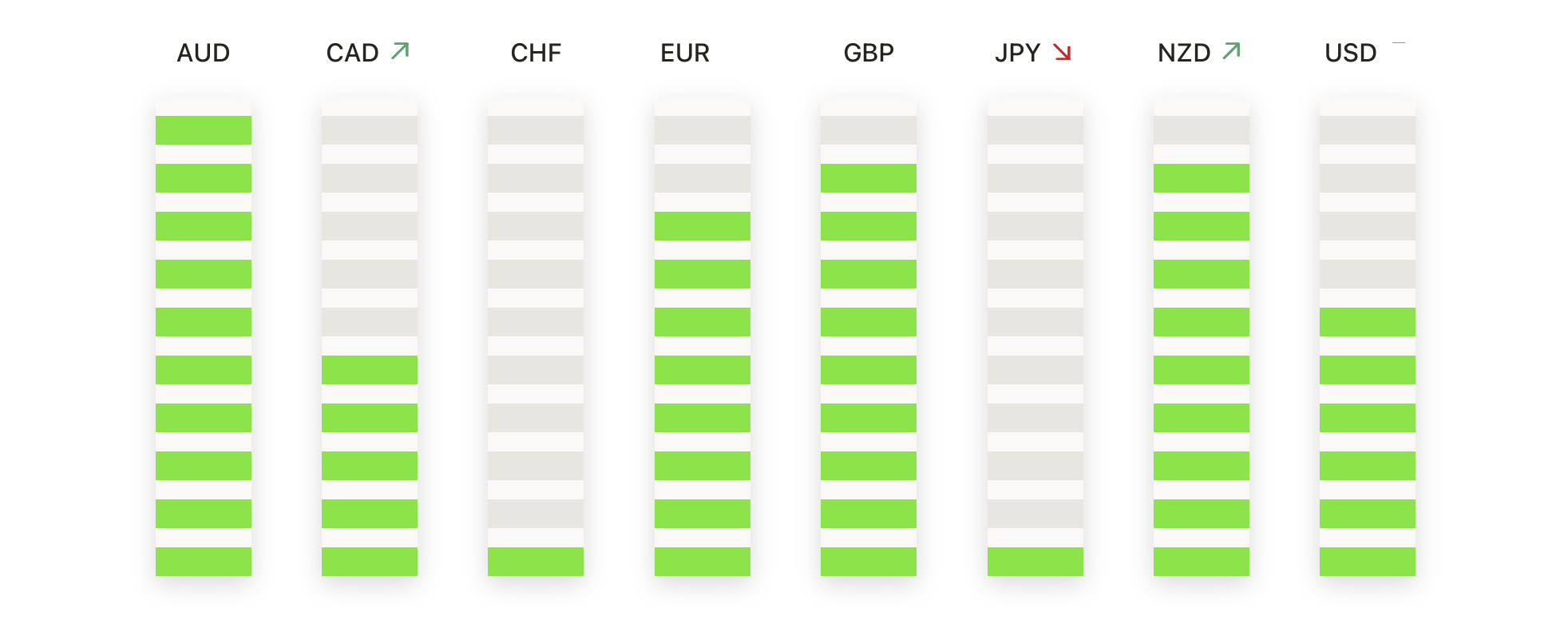
- EUR/USD Holds Steady as Buyers Maintain Support Above 1.1650: EUR/USD closed at 1.1659, rising 0.16% after trading between 1.1659 and 1.1682, leaving price still contained within the wider 1.1600–1.1750 corridor. Buyers have repeatedly defended the 1.1600 area, making it a firm support level, while rallies have consistently stalled beneath 1.1720–1.1750 resistance. The broader picture remains underpinned by higher lows since May’s trough at 1.1350. To regain momentum, the pair needs a decisive daily close above 1.1750, which would reassert bullish control and open scope for further gains. A drop back under 1.1600, however, would shift focus to 1.1500 as the next structural floor and risk rebalancing sentiment in favour of sellers.
- GBP/USD Rebounds as Demand Reappears Near the Floor: GBP/USD ended at 1.3439, gaining 0.32% after ranging between 1.3332 and 1.3486, recovering ground after yesterday’s sharp fall. Demand returned near 1.3330, reinforcing that area as a key base, with price continuing to trade inside the broader 1.3330–1.3550 consolidation zone. The corrective decline from July’s 1.3850 peak still weighs, with lower highs since mid-August leaving momentum fragile until buyers can break through resistance. A sustained close above 1.3485 would re-open 1.3550 and relieve near-term pressure, while a slip back under 1.3400 would shift the focus again to 1.3330. Losing that level could accelerate downside toward 1.3250, making the coming sessions critical for whether buyers can stabilise the broader trend.
- AUD/USD Presses Higher as Recovery Extends: AUD/USD settled at 0.6541, up 0.33% after moving between 0.6502 and 0.6554, pushing further into recovery from the late-August low at 0.6420. The pair has reclaimed the 50- and 200-day moving averages, giving buyers more confidence, and is now trading in the upper half of the wider 0.6400–0.6640 consolidation band. Resistance at 0.6560–0.6600 has proved difficult to clear, but a close above this zone would signal renewed bullish momentum and open the door to test 0.6640. Initial support remains firm at 0.6500, with the 100-day moving average converging around 0.6480 to provide a second line of defence.
- USD/JPY Slips Back as Rallies Falter: USD/JPY closed at 148.14, down 0.15% after trading between 147.88 and 149.14, easing back from yesterday’s bounce. The pair has been pinned around the 148 handle for weeks, with repeated attempts above 149 failing to stick, leaving resistance firmly in place. The recovery from July’s 144.50 low stalled shy of 151, and a sequence of lower highs since last week reflects growing fatigue in the rally. Sellers are beginning to test the downside, though dip demand persists near 147.50. A daily close below 147.80 would be the first clear signal of bearish traction, exposing 147.00 and then the late-August base at 146.50. For buyers to regain control, a clean break above 149.20 is needed, which would re-open the path to retest 150.
- Gold Surges to Fresh Record Highs as Breakout Accelerates: Gold ended at $3,564, rising 0.90% after trading between $3,526 and a new all-time high at $3,578, continuing its powerful advance. The breakout from months of consolidation has propelled the metal into uncharted territory, with prior resistance at $3,450–$3,500 now acting as a strong support zone for buyers. Momentum remains firmly bullish, with successive higher closes reinforcing confidence, though the scale of the rally leaves room for corrective pauses. Immediate focus is on a clean break through $3,578, which would unlock the psychological $3,600 threshold as the next target. On the downside, first support lies at $3,526, followed by $3,500, where demand is expected to re-emerge if prices retrace.
Market Movers:
- Alphabet Soars on Court Ruling Relief: Alphabet jumped 9.1% after a federal judge ruled the company can keep its Chrome browser but must share data and avoid exclusive search deals.
- Apple Gains as Search Partnership Secured: Apple climbed 3.8% after the ruling allowed it to keep Google Search as the default on iPhones, a deal worth about $20 billion annually.
- Macy’s Surges on Strong Q2 Results: Macy’s rose more than 20% after reporting Q2 net sales of $4.81 billion versus $4.71 billion expected. The retailer also raised full-year guidance to $21.15–$21.45 billion, signalling resilient consumer demand.
- Campbell Soup Rallies on Earnings Beat: Campbell Soup advanced over 7% after posting Q4 adjusted EPS of 62 cents, above forecasts of 56 cents.
- Bruker Sinks on $600 Million Stock Offering: Bruker plunged over 11% after announcing a public sale of mandatory convertible preferred shares, raising dilution concerns among shareholders.
Wall Street’s latest session highlighted the market’s growing divergence, with big technology names powering ahead while cyclical sectors lagged under the weight of softer economic signals and sliding oil. Europe’s rebound was helped by corporate strength, but regional data confirmed that growth remains uneven, and Asian markets showed the strain of rising bond yields. Gold’s record-breaking rally underscored demand for safe havens, while oil’s drop reflected supply risks shifting back to surplus. With US jobs data due on Friday and bond markets already volatile, investors face a critical test that could determine whether September lives up to its reputation as a difficult month for equities.