Wall Street managed a relief rally on Friday as inflation data came broadly in line with forecasts, helping to stem a three-day slide across major benchmarks. The rebound followed stronger-than-expected economic readings earlier in the week, including solid jobs figures and an upward revision to second-quarter growth, which had weighed on expectations for imminent policy easing. Despite the late bounce, the major indexes still snapped a three-week winning streak, reflecting investor caution over the path of interest rates and lingering weakness in technology shares. Overseas, European and Asian markets were also shaped by fresh tariff announcements from the White House, with pharmaceuticals under pressure, while energy prices edged higher after renewed supply concerns linked to the Russia–Ukraine conflict.
Key Takeaways:
- Dow Rebounds but Ends Week Lower: The Dow Jones Industrial Average rose 299.97 points, or 0.65%, to close at 46,247.29. The index snapped a three-day losing streak with Friday’s rally but still fell 0.2% over the week, marking its first decline in four weeks.
- S&P 500 Snaps Three-Week Winning Streak: The S&P 500 added 0.59% on Friday to finish at 6,643.70, staging a late rebound. Still, the benchmark slipped 0.3% across the week, ending a three-week run of gains as worries over monetary policy tempered risk appetite.
- Nasdaq Under Pressure From Tech Losses: The Nasdaq Composite gained 0.44% on the day to close at 22,484.07, though it shed 0.7% for the week. Software and AI-linked stocks weighed heavily on sentiment, with Oracle sliding more than 8% across the week.
- European Markets Lifted Despite Pharma Drag: European equities advanced on Friday, with the Stoxx 600 up 0.8% and major national benchmarks all higher. London’s FTSE 100 rose 0.74% to 9,284.83, Paris’ CAC 40 gained 0.86%, Milan’s FTSE MIB climbed 0.96%, and Frankfurt’s DAX rose 0.87%. However, the Stoxx Europe 600 Healthcare index ended flat after US President Donald Trump confirmed 100% tariffs on pharmaceutical imports starting October. Danish firms Zealand Pharma and Novo Nordisk fell 2.4% and 3.5% respectively, while Finland’s Orion slid 1.9%. JP Morgan analysts suggested the overall impact may be limited given US manufacturing plans. Broader trade tensions remained in focus as reports indicated the EU is preparing tariffs of up to 50% on Chinese steel. Additionally, Orsted shares fell 2% amid speculation it could sell a stake in its UK Hornsea 3 wind project.
- Asia Mixed as Pharma Stocks Slide on Tariffs: Asian equities were mixed, with heavy declines in the pharmaceutical sector after Trump announced 100% levies on branded drug imports. The Topix Pharma Index dropped 1.47%, with Daiichi Sankyo down 2.11%, Chugai off 3.64%, and Sumitomo tumbling 5.33%. In South Korea, Samsung Biologics and SK Bio Pharmaceuticals lost 1.71% and 3.71%. Hong Kong-listed Alibaba Health and JD Health slipped 2.92% and 2.23%. More broadly, Japan’s Nikkei 225 was flat while the Topix rose 0.59% to a fresh record high. South Korea’s Kospi fell 2.02%, the Kosdaq dropped 1.57%, and Hong Kong’s Hang Seng lost 0.86%. China’s CSI 300 ended flat, while Australia’s ASX 200 was marginally weaker. Tokyo’s inflation data also drew attention, with core consumer prices rising 2.5% in September, softer than the 2.8% forecast.
- US Consumer Spending Strong but Sentiment Slips: Consumer spending rose 0.6% in August, ahead of the 0.5% forecast, extending July’s solid gain and keeping GDP growth on firm footing. Analysts expect the pace to slow into year-end as higher prices weigh on households, though third-quarter growth estimates remain near 2.5%. At the same time, the University of Michigan’s September index of consumer sentiment fell to 55.1, a 5.3% monthly drop, with declines across most demographics. Notably, sentiment among households with larger stock holdings held steady, reflecting a divergence tied to market wealth. Inflation expectations remained broadly anchored, with the one-year outlook at 4.7% and the five-year at 3.7%.
- Oil Gains on Russian Supply Concerns: Crude prices rose after Ukraine’s drone attacks on Russian refineries disrupted exports. Brent settled at $69.78, up 0.52%, while WTI gained 0.54% to $65.32. Russia also extended restrictions on gasoline exports and announced a partial ban on diesel shipments through year-end, tightening supplies further.
- Yields Hold Steady as Inflation Matches Forecasts: US Treasury yields were little changed after the core PCE index rose 2.9% year on year, matching expectations. The 10-year yield closed near 4.18%, the 2-year at 3.65%, and the 30-year at 4.76%. The data confirmed inflation is moderating but remains above the Fed’s 2% target, while stronger jobless claims and GDP figures earlier in the week limited expectations for deeper rate cuts.
FX Today:
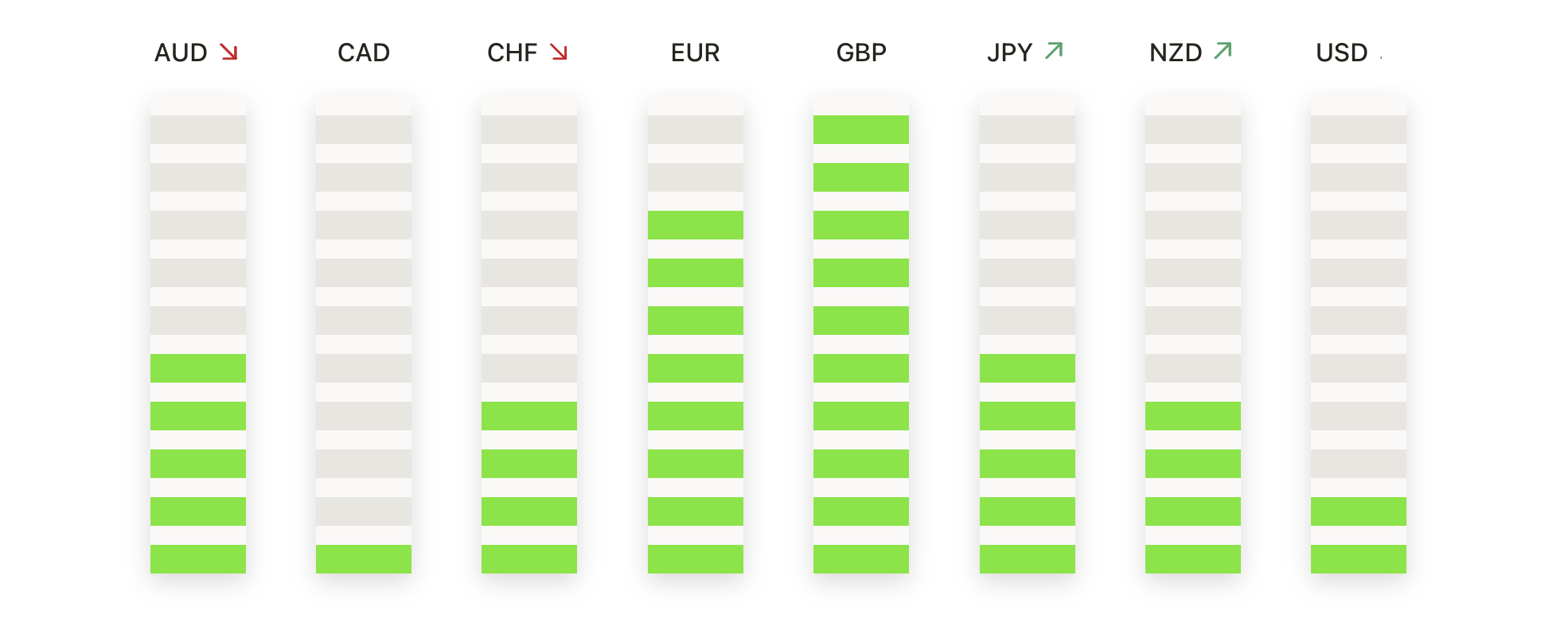
- EUR/USD Holds Above Key Support: EUR/USD closed at 1.1704, up 0.33%, after trading between 1.1659 and 1.1706, ending near the highs with a stabilising candle. The rebound came as buyers stepped back in around 1.1650, limiting downside pressure after a week of softer momentum. The 50-day moving average at 1.1680 continues to act as nearby support, while the 100-day at 1.1589 and the 200-day at 1.1176 underpin the longer-term trend of higher lows since June. Immediate resistance sits at 1.1750, then 1.1850, where earlier advances stalled. On the downside, a sustained break under 1.1650 would risk a move towards 1.1580, leaving the bias more defensive if buyers cannot hold the floor.
- GBP/USD Rebounds From Recent Weakness: GBP/USD settled at 1.3407, up 0.47%, after ranging between 1.3330 and 1.3415, closing near the top of the range after testing 1.3350 support. The bounce helped ease pressure following sterling’s largest weekly fall since July, though the pair remains capped beneath the 50-day at 1.3469 and the 100-day at 1.3489. The 200-day at 1.3128 provides a wider base, keeping the long-term outlook constructive despite recent weakness. Price action has been marked by lower highs since mid-September, underlining a loss of momentum after repeated failures near 1.3700. Resistance is at 1.3450 and 1.3550, while support stays firm at 1.3350, followed by 1.3250 if sellers regain control.
- USD/JPY Retreats Below 150.00: USD/JPY finished at 149.47, down 0.21%, after trading between 149.40 and 149.96, slipping back after stalling just under the psychological 150.00 mark. The pullback followed a sharp rally earlier in the week, leaving a small bearish candle that showed sellers defending resistance. The 20-day average at 147.72 and the 50-day at 146.45 are both trending higher, while the 100-day at 148.46 and 200-day at 148.93 continue to provide key reference levels. A sustained break above 149.80 would reopen the path towards 150.50–151.00, while initial support is now at 149.00 and then 148.50 if pressure builds further.
- Silver Extends Rally Towards 47.00: Silver closed at $46.08, up 2.02%, after trading between $44.61 and $46.62, finishing near the highs with another strong bullish candle. The metal has now posted successive gains through September, underpinned by rising averages with the 20-day at $41.79, 50-day at $39.79, 100-day at $37.47, and 200-day at $34.59 all aligned higher. The breakout above $45.00 turned that level into immediate support, while buyers now target resistance at $47.00. A move beyond this barrier would open the way towards $47.50–$48.00.
- Gold Consolidates Near Highs Above $3740: Gold ended at $3767, up 0.47%, after ranging between $3749 and $3784, maintaining its recent breakout above $3700 with another positive close. The metal continues to be supported by a bullish alignment of moving averages, with the 20-day at $3612, 50-day at $3475, 100-day at $3400, and 200-day at $3158 all rising firmly. The uptrend since early August remains in place, with successive higher lows confirming strong underlying demand. Resistance now stands at $3785, then $3800, while support is seen at $3740 and the breakout zone near $3700.
Market Movers:
- Energy Shares Advance With Oil Prices: Energy producers and service firms rallied alongside crude as WTI touched a 1.75-month high. Devon Energy gained more than 3%, Schlumberger rose over 2%, while Exxon Mobil, ConocoPhillips, and Marathon Petroleum all closed higher.
- Electronic Arts Surges on Take-Private Talks: EA jumped more than 14% after reports the company is in advanced talks to be taken private by a consortium led by Silver Lake.
- Crinetics Pharmaceuticals Soars on FDA Approval: Shares in Crinetics surged more than 27% after the company secured approval for its Palsonify treatment for adults with acromegaly.
- Paccar Jumps on Tariff Boost for US Trucks: Paccar gained more than 5% after confirmation that imports of heavy trucks will be hit with a 25% tariff, supporting demand for US-made vehicles.
- Mirion Technologies Rallies on Positive Coverage: Mirion Technologies rose over 10% after JPMorgan initiated coverage with an overweight rating and a $28 price target.
- Concentrix Drops on Weak Earnings Outlook: Concentrix fell more than 13% after issuing fourth-quarter guidance well below analyst expectations, disappointing investors.
- RH Slips on New Tariffs for Cabinet Imports: RH lost over 4% after the US announced a 50% tariff on imported kitchen cabinets, bathroom vanities, and related products, effective October.
- Costco Retreats After Mixed Sales Results: Costco slid more than 2% after quarterly US comparable sales rose 5.1%, slightly below the consensus expectation of 5.21%.
Friday’s rebound helped limit the week’s damage for equities, but it was not enough to prevent the major US benchmarks from snapping their multi-week winning streaks. Inflation data met forecasts and steadied sentiment after stronger growth and labour figures had unsettled expectations earlier in the week. With tariffs reshaping the outlook for pharmaceuticals and industrials, and energy prices climbing on fresh supply risks, investors face a complex mix of signals heading into the next quarter. The market’s tone remains one of caution, with traders balancing optimism over steady consumer spending against uncertainty on the pace of Federal Reserve policy easing.