US stocks fell sharply on Tuesday as geopolitical turmoil in the Middle East and weak consumer data spooked investors. The Dow Jones Industrial Average slid nearly 300 points, while the S&P 500 and Nasdaq also closed notably lower. Oil prices jumped over 4% after President Trump threatened Iran’s leader and called for unconditional surrender, escalating tensions further. Meanwhile, May retail sales dropped 0.9%, a steeper decline than expected, raising fresh concerns about the strength of consumer spending. With the Federal Reserve’s policy meeting looming, investors remained on edge over potential shifts in tone.
Key Takeaways:
- Dow Drops Nearly 300 Points as Conflict Escalates: The Dow Jones Industrial Average lost 299.29 points, or 0.70%, to close at 42,215.80. Losses accelerated in afternoon trade following President Trump’s aggressive social media posts targeting Iran’s leadership and warnings of military action.
- S&P 500 Falls on Retail Weakness and Geopolitical Fears: The S&P 500 shed 0.84% to finish at 5,982.72, dragged lower by broad sector declines. Consumer discretionary and communication services sectors were among the worst performers, as the combination of weak retail sales and Middle East tensions pressured sentiment.
- Nasdaq Retreats Despite Tech Resilience: The Nasdaq Composite dropped 0.91% to 19,521.09, giving up early session gains. While chip stocks held up relatively well, broader tech shares were unable to offset losses in high-growth and biotech names.
- Europe Slides as Conflict and Trade Uncertainty Weigh: European markets closed broadly lower on Tuesday as the Israel-Iran conflict overshadowed positive economic signals from Germany. The Stoxx Europe 600 index declined 0.8%, led by losses in industrials and consumer discretionary sectors. Germany’s DAX shed 1.12%, while France’s CAC 40 fell 0.76% and Italy’s FTSE MIB dropped 1.36%. In the UK, the FTSE 100 slipped 0.46% to 8,834.03. Market sentiment remained subdued despite a newly signed US-UK trade agreement, as uncertainty lingers over key sectors like steel and pharmaceuticals. German investor morale improved sharply, with the ZEW sentiment index jumping to 47.5 in June from 25.2, supported by a fresh €46 billion tax relief package and upgraded GDP forecasts.
- Asia Mixed as Israel-Iran Tensions Cloud Regional Outlook: Asia-Pacific markets ended Tuesday with a mixed performance as traders digested the escalating Middle East conflict and its potential impact on global growth. Japan’s Nikkei 225 advanced 0.59% to 38,536.74 and the Topix added 0.35%, supported by a dovish Bank of Japan which kept interest rates steady and confirmed plans to slow bond purchases next April. South Korea’s Kospi inched up 0.12%, but the Kosdaq slipped 0.21%. Chinese markets were subdued, with the CSI 300 flat at 3,870.38 and Hong Kong’s Hang Seng down 0.34% to 23,980.30. Australia’s ASX 200 finished unchanged at 8,541.30, while India’s Nifty 50 and Sensex dropped 0.42% and 0.35% respectively.
- Oil Surges Over 4% on Trump Threats Against Iran: West Texas Intermediate crude rose $3.38, or 4.71%, to settle at $75.15 per barrel, while Brent gained $3.49, or 4.75%, to close at $76.72. Both benchmarks climbed nearly 5% in after-hours trade. Prices spiked after Trump threatened Iran’s supreme leader and signalled possible escalation, reversing Monday’s losses and fuelling concerns over supply disruption.
- Treasury Yields Tumble After Weak Retail Sales: The 10-year Treasury yield fell over 6 basis points to 4.391%, while the 2-year yield dipped to 3.948%. Bond prices jumped after May retail sales data showed a 0.9% decline, sharply missing expectations. Ex-auto sales dropped 0.3%. The weakness heightened recession fears and reinforced bets that the Fed may adopt a more dovish stance later this year.
- Retail Sales Drop Raises Growth Concerns: US retail sales fell 0.9% in May, steeper than the 0.6% decline forecast. The pullback was broad, with gas station sales down 2% and core sales also disappointing. Analysts noted rising consumer caution and geopolitical fears are beginning to weigh on spending patterns, complicating the Fed’s policy outlook ahead of this week’s meeting.
FX Today:
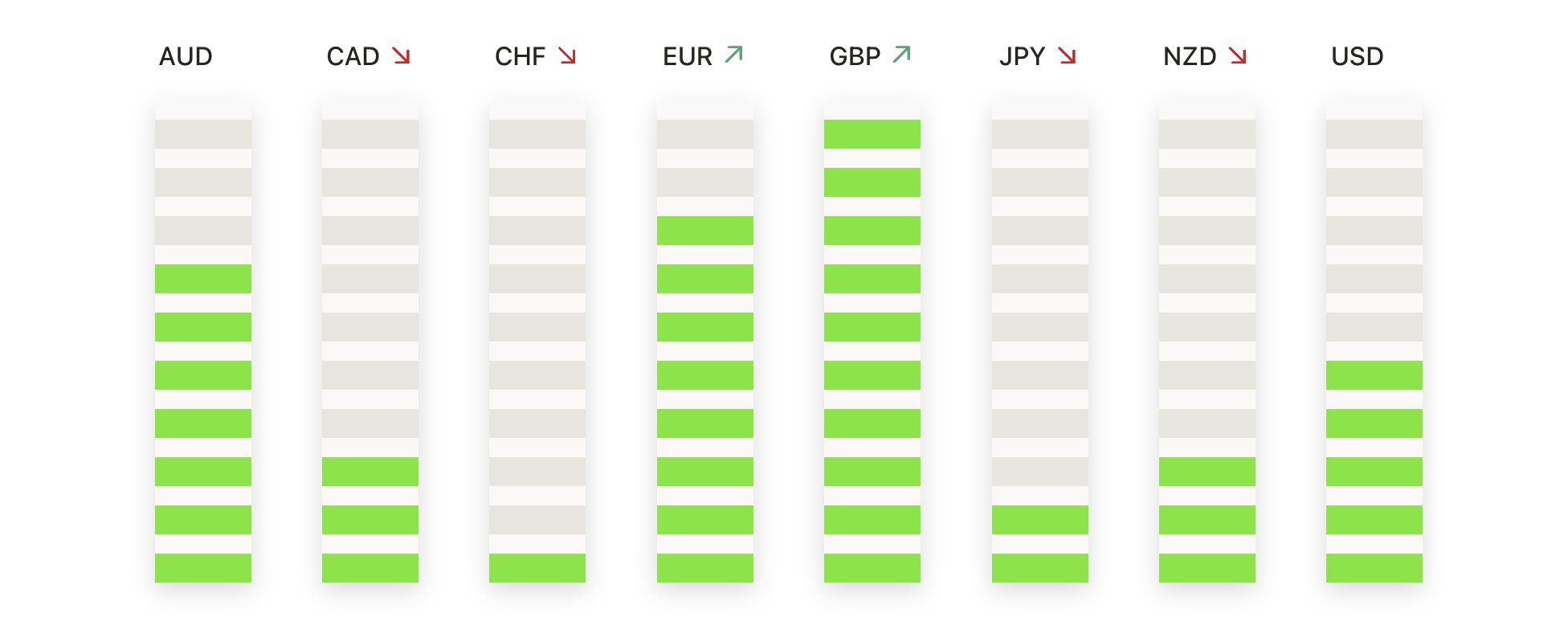
- EUR/USD Reverses After Reaching New Highs: The EUR/USD pair closed at 1.1486 on Tuesday, falling 0.63% after touching an intraday high of 1.1579 and a low of 1.1474. A strong bearish candle formed as the pair failed to sustain above the 1.1600 level for a second day, slipping back below the psychological 1.1500 handle. The selloff erased most of Monday’s advance and disrupted the short-term bullish channel. Support is seen near 1.1450, with the 50-day SMA at 1.1339 offering additional downside protection. Resistance remains at 1.1600–1.1620, where repeated rejections continue to limit upside momentum.
- GBP/USD Slides Sharply Below 1.3500 Handle: The GBP/USD pair dropped 1.11% on Tuesday to settle at 1.3426, falling from a high of 1.3579 and carving out a strong bearish candle. Price broke decisively below the 1.3500 psychological level and finished near the session low of 1.3423, confirming downside pressure after days of sideways action. The pair remains above its 50-day SMA at 1.3367, with the 100-day and 200-day SMAs at 1.3053 and 1.2924 continuing to support a broader bullish trend. Short-term support now lies around 1.3360–1.3400, while resistance has shifted lower to 1.3550 and 1.3650. A quick recovery above 1.3500 is needed to reestablish upside momentum.
- AUD/USD Retreats from Local Highs but Holds Channel: The AUD/USD pair ended Tuesday at 0.6475, down 0.72% after trading between 0.6543 and 0.6466. The pair failed to sustain above 0.6550, producing a modest upper wick that suggests fading bullish momentum. Despite the drop, price action continues to oscillate within a broad range, and the pair remains above its 50-day SMA at 0.6423. The 100-day and 200-day SMAs at 0.6351 and 0.6431 offer layered support beneath current levels. Resistance persists at 0.6550–0.6570, while a break below 0.6420 would increase pressure on the 0.6350–0.6370 zone. Overall trend bias remains neutral until price exits the current sideways channel.
- USD/JPY Rebounds but Faces Strong Resistance: The USD/JPY pair closed at 145.24 on Tuesday, up 0.37% after rising from a low of 144.36 to a high of 145.38. Price rebounded from below the 144.50 level and formed a modest bullish candle, but upward momentum appeared limited as the session failed to close above the day’s high. The pair now sits between the 50-day SMA at 144.03 and the 100-day SMA at 147.13, with the 200-day SMA still above at 149.39. Resistance is clearly established near 145.40, with a stronger breakout required to test the 147.00 barrier. On the downside, key support remains at 144.00 and then 143.30.
- Gold Holds Firm After Rejection from $3,400 Level: Gold settled at $3,384 on Tuesday, slipping just 0.01% after reaching a session high of $3,403 and a low of $3,366. The metal posted a narrow-range candle with long wicks on both ends, reflecting investor indecision and profit-taking near multi-month highs. Despite the intraday reversal, gold remains above the 50-day SMA at $3,293, with additional support at $3,366 and deeper protection at the rising 100-day SMA at $3,114. Resistance is still at $3,403, and a close above that could open the path toward $3,450. For now, price action suggests temporary consolidation as bulls defend recent gains.
Market Movers:
- Travel and Hotel Stocks Slide on Escalation Fears: Shares of travel-related companies fell sharply on Tuesday as President Trump downplayed the chances of an early resolution to the Israel-Iran conflict. United Airlines (UAL) dropped over 6%, Delta Air Lines (DAL) lost more than 4%, and Southwest Airlines (LUV) declined over 2%. Casino and cruise names also sank, with MGM Resorts (MGM), Las Vegas Sands (LVS), Carnival (CCL), and Norwegian Cruise Line (NCLH) all closing down over 2%.
- Redwire Tumbles on Discounted Share Offering: Redwire Corp (RDW) plunged more than 18% after announcing a $200 million public offering of common stock priced between $16.75 and $17.75 — a steep discount from Monday’s close of $20.57.
- MakeMyTrip Slides on Large Dual Offering: MakeMyTrip Ltd (MMYT) dropped more than 8% after revealing plans for a dual offering of 14 million common shares and $1.25 billion in convertible senior notes due 2030.
- Verve Therapeutics Surges on Eli Lilly Acquisition: Verve Therapeutics (VERV) soared more than 82% after Eli Lilly agreed to acquire the company in a $1.3 billion deal. The buyout price represented a significant premium and reignited investor interest in gene-editing firms.
- Jabil Rallies After Strong Earnings and Guidance: Jabil (JBL) jumped over 8% to lead S&P 500 gainers after posting Q3 revenue of $7.83 billion, well above the $7.04 billion estimate. The company also raised its full-year revenue forecast to $29 billion, topping prior guidance and Wall Street consensus.
Markets closed firmly in the red on Tuesday as a combination of geopolitical escalation and disappointing retail data soured investor sentiment. The intensifying Israel-Iran conflict, marked by heightened rhetoric and military repositioning, drove oil sharply higher and weighed on travel, consumer, and healthcare stocks. Weak May retail sales amplified fears of slowing US consumption just ahead of the Federal Reserve’s latest policy decision. Treasury yields fell as bond markets priced in increased recession risks, while gold held near multi-month highs amid safe-haven demand. With uncertainty building on multiple fronts, all eyes now turn to the Fed’s statement for clues on rate guidance and the broader economic outlook.