
The global business landscape in 2026 is defined by a fascinating intersection of traditional industrial power and rapid technological evolution. As we analyze the biggest industries in the world, it becomes clear that revenue alone does not tell the full story of influence. While massive revenue figures highlight the sheer scale of economic activity, market capitalization and net profit margins often dictate where the world’s biggest capital flows are directed.
From the resilient energy sector to the hyper-growth seen in information technology, the 10 biggest industries today are navigating complex geopolitical shifts and fundamental changes in consumer behavior. Understanding these dynamics can provide useful context for participants in the global economy, including retail traders and small business leaders following broader industry trends.
Global Industrial Market Outlook and Economic Trends in 2026

The global economic climate in 2026 is characterized by a selective expansion. While some regions face inflationary pressures, others are benefiting from a massive influx of capital into infrastructure and digital transformation. Global GDP growth is currently projected to hover around 2.9 percent to 3.1 percent, a rate that reflects a stabilizing post-volatility period.
Methodology for Ranking the Largest Industries in the World
To determine the largest industries in the world, we primarily utilize total revenue as the baseline metric. However, relying solely on annual revenue may be misleading for those analyzing the economy. We also factor in GDP contribution, employment rates, and market capitalization to provide a holistic view. Data is aggregated from multinational financial reports, government-owned entity disclosures, and industry research firms like IbisWorld to ensure accuracy across global markets.
Comparing Business Volume to Global Industries by Revenue
High business volume does not always equate to high profitability. For instance, the manufacturing industry moves a staggering amount of physical goods, contributing significantly to global trade, yet its margins may indicate a higher sensitivity to raw material costs compared to the services industry.
| Metric | High Volume Industries | High Margin Industries |
|---|---|---|
| Primary Focus | Scalability and logistics | Intellectual property and fees |
| Examples | Retail, Automotive, Food | Financial services, Software, Biotech |
| Economic Role | Massive employment and fuel for trade | Wealth creation and market cap growth |
Impact of AI Supercycle on Biggest Industries by Revenue Growth
We are currently witnessing what economists call an AI supercycle. Technological advancements in machine learning have moved beyond experimental stages and are now deeply integrated into the business landscape. This suggests that the growth rate of information technology and cloud computing will likely outpace traditional sectors through the end of the decade.
Top 10 Largest Industries in the World by Revenue and Market Trends
The following industries play a major role in modern economic activity. Their performance can affect broader economic conditions, including interest rates and consumer prices.
1. Financial Services: Leading World by Revenue Rankings
The financial services sector remains the undisputed leader in total revenue. This industry encompasses everything from retail banking and asset management to insurance and fintech. In 2026, the sector has been bolstered by digital transformation, allowing banks to reach underbanked populations in emerging markets.
- Total Revenue Contribution: Approximately 20-22 percent of global GDP.
- Key Drivers: Interest rate environments, digital payment adoption, and wealth management fees.
2. Healthcare and Insurance: Role of UnitedHealth Group and Global Providers
The healthcare and insurance sector has seen consistent growth due to aging demographics in the U.S. and Europe, alongside rising middle-class demand in Asia. Companies like UnitedHealth Group demonstrate the scale of this industry, managing trillions in annual revenue by integrating clinical care with insurance services.
3. Retail and E-commerce: Analysis of the Biggest Industries by Revenue
E-commerce has shifted from a fast-growing sub-sector to the primary driver of the retail world. Consumer behavior now favors omnichannel experiences, where the manufacturing industry and supply chains must be perfectly synchronized to meet high demand for rapid delivery.
4. Oil and Gas: Energy Sector Revenue and Exxon Mobil Market Share
Despite the rise of renewable energy, the energy sector—specifically oil and gas—remains vital. Fossil fuels still provide the majority of the world’s fuel and industrial raw materials. Giants like Exxon Mobil and government-owned entities continue to generate massive revenue, even as they invest in sustainable materials for the future.
5. Information Technology: Market Capitalization of Software Giants
The information technology sector is where the highest concentration of market capitalization resides. Cloud computing and semiconductor manufacturing have become the backbone of all other industries. Without the hardware and software provided by this sector, global trade would effectively grind to a halt.
6. Automotive Manufacturing: Volkswagen and EV Industry Trends
The automotive sector is undergoing its most significant shift in a century. Companies like Volkswagen are transitioning entire supply chains to support electric vehicles. This manufacturing industry segment is highly sensitive to geopolitical tensions, particularly regarding battery mineral access.
7. Telecommunications: Connectivity Infrastructure in the Global Economy
The telecom industry is currently deploying 5G and early-stage 6G technologies. These advancements are necessary for the proliferation of IoT (Internet of Things) and autonomous systems, making telecommunications a utility as essential as water or electricity.
8. Construction and Real Estate: Development in the Largest Industries
Construction is a primary indicator of economic health. In 2026, the focus has shifted toward sustainable systems and energy-efficient building practices. This industry offers significant opportunities for specialized contractors and sustainable materials providers.
9. Food and Beverage: Supply Chain Impact on Industries in the World
The food industry is the most fundamental of all 10 biggest sectors. It relies on complex global supply chains that are currently being reshaped by climate change and technological advancements in precision agriculture.
10. Logistics and Shipping: Moving Trade for Top Industries
Logistics serves as the connective tissue of the global economy. The rise of e-commerce has put a premium on “last-mile” delivery, leading to high demand for automated warehouses and aerospace-based delivery solutions.
Largest Industries in the World by Market Capitalization
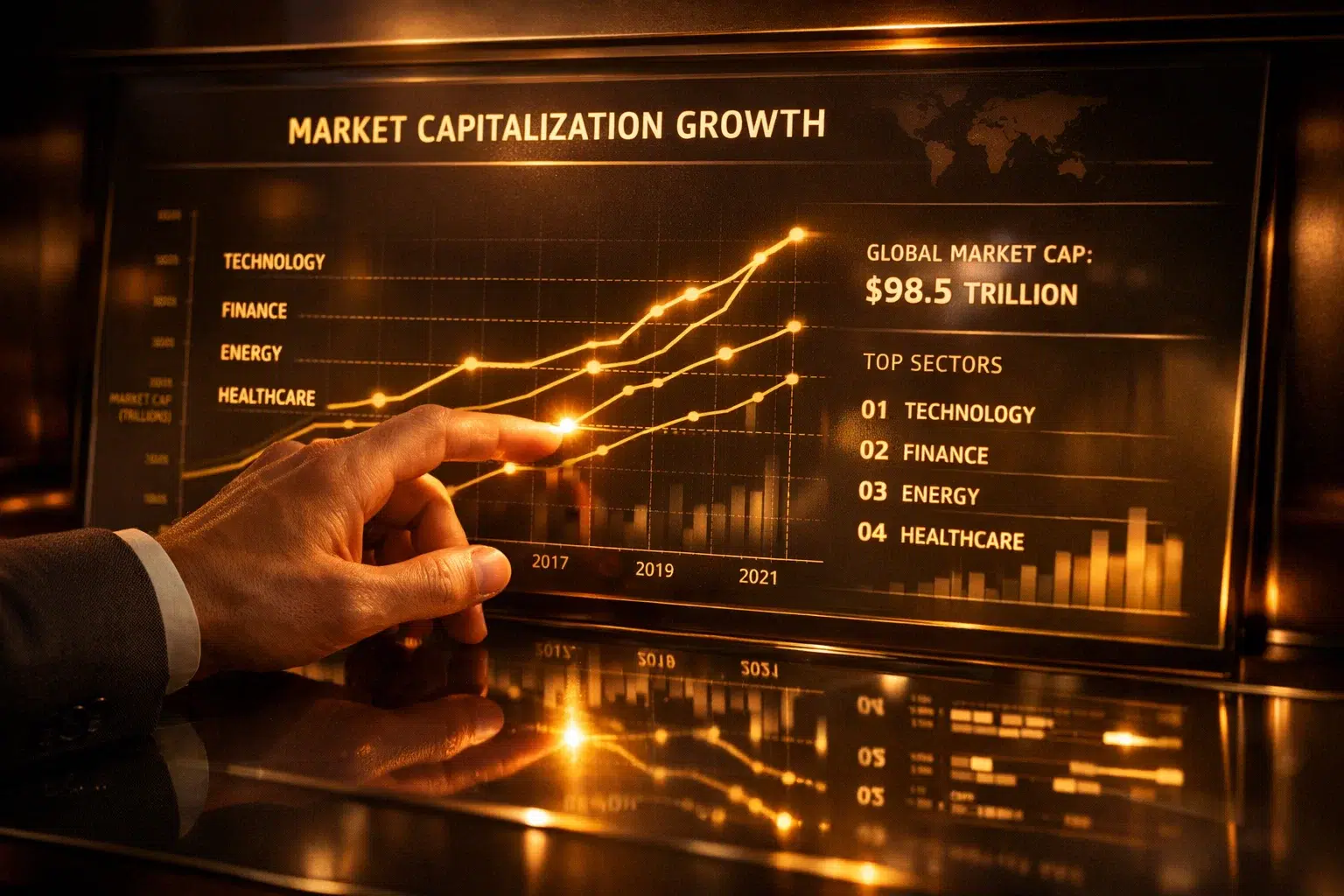
While revenue measures “top-line” activity, market capitalization reflects the collective investor belief in future profitability. Often, a company with lower annual revenue but higher growth potential will dominate the market cap rankings.
Walmart: Dominating Retail Revenue Worldwide
Walmart remains the world’s largest company by revenue, a testament to its massive physical footprint and growing e-commerce presence. It manages a supply chain that involves millions of workers and thousands of vendors globally.
Amazon: Online Retail and Cloud Economy Leadership
Amazon represents a hybrid of retail and tech. While its retail arm generates huge revenue, its cloud computing division (AWS) provides the high-margin profit that drives its massive market cap.
UnitedHealth Group: Healthcare and Insurance Market Power
In the U.S. market, UnitedHealth Group has become a dominant force. By owning both the insurance provider and the doctors’ offices (Optum), they have created a vertically integrated model that other healthcare companies are desperate to replicate.
Apple: Technology Innovation and Revenue Leadership
Apple consistently leads in market capitalization because of its ecosystem. The ability to lock users into a hardware and software loop allows for high-margin services revenue that complements its hardware sales.
Saudi Aramco and Exxon Mobil: Oil and Gas Sector Giants
Saudi Aramco is often the most valuable company in the world when oil prices are high. As a government-owned entity, it has access to some of the lowest-cost oil reserves on the planet, allowing for unmatched cash flow within the energy sector.
Future Outlook: Fastest-Growing Industries to Watch

For investors and professionals, fast-growing industries are often areas of particular interest. These sectors are typically associated with a high compound annual growth rate (CAGR).
- Renewable Energy: The transition to wind, solar, and hydrogen is attracting trillions in capital.
- Biotechnology: Innovations in gene editing and mRNA technology are creating a new era for the biotech sector.
- Semiconductors: As every product becomes “smart,” the demand for chips is reaching permanent high levels.
Renewable and Clean Energy: Fastest-Growing Sector Momentum
The shift toward sustainable systems is no longer just a trend; it is a structural change in the global economic landscape. Renewable energy projects now often have a lower cost of capital than traditional fossil fuel projects in many global markets.
Artificial Intelligence and Automation: Transforming the Biggest Industries
AI is not just an industry itself; it is an “enabling technology.” It is increasing efficiency in the manufacturing industry, reducing risks in financial services, and speeding up drug discovery in the biotech field.
Biotechnology and Genomic Sequencing: Healthcare and Insurance Innovation
The biotech sector is moving toward personalized medicine. By sequencing a patient’s genome, healthcare providers can tailor treatments specifically to them, which suggests a future where “one size fits all” medicine is obsolete.
Space Economy: New Frontier for Industries in the World
The aerospace sector is expanding into commercial space travel and satellite-based internet. This represents a long-term growth opportunity that could eventually rival the size of the traditional aviation industry.
Cybersecurity and Data Privacy: Protecting Global Revenue
As digital transformation accelerates, the cost of cybercrime rises. This has made cybersecurity a non-discretionary expense for every multinational corporation, ensuring steady growth for the foreseeable future.
Strategic Insights: How Small Businesses Can Tap into Top Industries

You do not need to be a multinational corporation to benefit from these trends. Small businesses may find niches within the supply chains of these giants.
Investment and Career Potential in Largest Industries
Allocating skills or capital toward the fastest-growing sectors—such as 5G, renewable energy, or cloud computing—is often associated with higher returns and career stability. The services industry, in particular, has low barriers to entry for specialized consultants.
Strategic Opportunities for Small Businesses in 2026
Small businesses may leverage the digital transformation tools provided by big tech. Using cloud-based analytics allows a local shop to compete with larger rivals in terms of inventory management and consumer behavior analysis.
Reshoring and Nearshoring Models in Biggest Industries
Geopolitical tensions have led many companies to move their manufacturing industry hubs closer to home. This “nearshoring” creates local opportunities for hospitality, construction, and logistics providers in regions that were previously overlooked.
Wall Street Verdict: Market Capitalization Trends for Top Industries
Financial experts suggest that while revenue is a sign of current health, “valuation multiples” are the best way to see where the smart money is going. Currently, tech and healthcare command the highest multiples, while the energy sector and utility companies trade at lower valuations due to their capital-intensive nature.
Where the Global Economy Is Headed
Toward the end of the decade, the business landscape may increasingly reflect a divide between the physical economy (such as fuel, food, and manufacturing) and the digital economy (including AI, data, and cloud technologies). Companies that operate across both areas could be well-positioned within this evolving environment.
Emerging Markets and Shifting Industry Trends
Countries in Southeast Asia and parts of Africa are experiencing the fastest growth in consumer demand. This is shifting the focus of the global trade away from the traditional U.S.-Europe axis toward a more multipolar world.
Digital Experience Economy and Social Commerce
The way we buy things is changing. Social commerce—buying directly through video platforms—is becoming the dominant form of e-commerce for younger generations, forcing traditional retail giants to reinvent their marketing strategies.
Green Technology Leadership in the Largest Industries in the World
Leadership in green tech is becoming a matter of national security. Countries that dominate the production of solar panels, batteries, and sustainable materials will likely dictate the terms of the global economy for the next thirty years.
FAQ
Which Sector Shows the Highest Profit Margins Beyond Revenue?
While industries like retail and automotive generate some of the largest revenue figures, they often operate on thin margins due to high overhead and inventory costs. In contrast, the software and financial services sectors typically exhibit the highest profit margins because their cost of goods sold is relatively low. Once a software product is developed, the cost to sell it to an additional million users is minimal, allowing these companies to convert a much higher percentage of their revenue into actual profit for shareholders.
How Do Geopolitical Shifts Affect the Biggest Industries in the World?
Geopolitical instability can disrupt the intricate supply chains that the manufacturing industry and energy sector rely upon. When trade tensions rise between major economies like the u.s. and its partners, it often leads to higher tariffs and restricted access to critical components like semiconductors. This forced shift towards reshoring or nearshoring changes the cost structure of global trade, as companies prioritize the security of their supply lines over the absolute lowest production cost available in the global markets.
What Role Does ESG Compliance Play in 2026 Revenue Projections?
Environmental, Social, and Governance (ESG) criteria have become a standard part of risk assessment for institutional investors. For the energy sector and industries like construction, maintaining high ESG scores is essential for accessing low-cost capital. Companies that fail to adapt to sustainable systems may face higher insurance premiums or exclusion from major investment portfolios. This suggests that future revenue projections are increasingly tied to a company’s ability to demonstrate long-term sustainability and ethical governance.
Why Is Market Capitalization Often Decoupled From Total Sales?
Market capitalization is a forward-looking metric that represents the present value of all future expected earnings. A company in a fast-growing industry like biotechnology may have low current sales but a massive market cap because investors believe it will eventually dominate a new medical field. Conversely, a utility company may have massive annual revenue but a lower market cap because its growth rate is capped by regulation and its future earnings are perceived as stable but unexciting.
Which Fastest-Growing Industries Face Highest Risk of Displacement?
Industries that rely on routine cognitive or manual tasks are at the highest risk of displacement due to technological advancements in AI and robotics. While the manufacturing industry is currently seeing a boom, the specific roles within it are shifting away from manual assembly toward automated oversight. Furthermore, traditional segments of the hospitality and telecom industries may find their business models challenged by decentralized platforms and satellite-based connectivity that bypasses older, more expensive infrastructure.
How Does Hyperinflation Impact Global Industries by Revenue?
Hyperinflation in specific geographic regions can artificially inflate the nominal revenue figures of multinational corporations when reported in local currencies. However, when these figures are converted back to a stable reserve currency for global reporting, the real economic activity often shows a decline. This creates a complex environment for industries like food and beverage or retail, where they must constantly adjust prices to maintain margins while navigating the decreasing purchasing power of their local consumer base.