Index trading has become a cornerstone of modern financial markets, offering retail and institutional investors a structured way to participate in broad market movements. If you’ve ever wanted to trade the overall economic pulse of a country or sector without picking individual stocks, index trading provides that avenue. This comprehensive guide, built on the principles of financial expertise and regulatory transparency, will walk you through what index trading is and, crucially, how to start trading it effectively, focusing on risk management and informed decision-making. We aim to provide an authoritative, user-centric view, ensuring you understand the mechanics and the necessary precautions before committing capital.
Index Trading Definition
At its core, a financial index is a hypothetical portfolio of securities representing a specific market or a segment of a market. Think of it as a barometer. For example, the S&P 500 tracks the performance of 500 large-cap US companies, serving as a key indicator for the entire US stock market. When we discuss index trading, we are referring to speculating on the future price movement of that entire index, not the individual stocks within it. This offers a powerful diversification benefit, as the performance of the trade is dependent on the overall market trend rather than the fortunes of a single company.
How Index Trading Works
Index trading is primarily conducted through derivative products, which allow traders to speculate on the index’s price without owning any of the underlying assets (like the stocks). This distinction is vital for a beginner to grasp. When you trade an index, you are engaging in a contract—a promise to exchange the difference in the index’s value from the time the trade is opened to when it is closed. The derivative’s price closely tracks the real-time movement of the underlying index. A key observation from seasoned traders is that indices tend to be less volatile than single stocks, though they are certainly not immune to major market shocks. The primary derivative instruments used include Futures, Options, and Contracts for Difference (CFDs), each with its own risk profile and capital requirements.
Start Trading
The journey to successfully trading indexes requires discipline, education, and adherence to a structured plan. It is not an endeavor to be rushed. Establishing a solid foundation is the best way to mitigate the inherent risks of the market. The initial phase involves selecting the right broker and understanding the mechanics of execution. This is where your focus on how to start trading it truly begins.
Practical Guide Beginners
Before placing your first trade, a beginner should dedicate time to simulated trading. Many reputable brokers offer demo accounts, which allow you to trade in a real-market environment using virtual capital. This provides invaluable experience in executing trades, setting stop-loss and take-profit orders, and managing simulated equity without real financial consequences. A financial expert might suggest that a trader should be profitable in a demo account for a continuous period of at least three to six months before considering live trading. Furthermore, a beginner must develop a well-defined trading plan that details risk limits, entry and exit criteria, and preferred index markets.
Opening Account And Verification
To begin index trading, you need to open an account with a regulated brokerage firm that offers index derivative products. The choice of a broker is one of the most critical decisions you will make. You should look for brokers regulated by top-tier financial authorities, such as the Financial Conduct Authority (FCA) in the UK, the Australian Securities and Investments Commission (ASIC), or the Cyprus Securities and Exchange Commission (CySEC).
The account opening process typically involves:
- Application: Filling out an online application with your personal and financial details.
- Verification: Submitting identification documents (such as a passport or driver’s license) and proof of residence (utility bill or bank statement). This is a legal requirement under Know Your Customer (KYC) and Anti-Money Laundering (AML) regulations to prevent financial crime.
- Financial Assessment: Some regulated brokers may require you to complete a brief questionnaire to assess your trading experience and financial stability, especially when offering leveraged products like CFDs. This step is designed to ensure the products you access are appropriate for your knowledge level.
Funding Account And Deposit
Once your account is verified, you must deposit capital. Brokerages offer various funding methods, including bank wire transfers, credit/debit cards, and e-wallets. It is critical to note that the money you trade with should be strictly risk capital—funds you can afford to lose without impacting your financial security. The amount you deposit will determine your position sizing and risk exposure. Experienced traders often advise starting with a small amount and gradually increasing capital as you gain experience and confidence in your strategy.
Key Steps
Successfully starting index trading involves following a sequence of logical steps that move from theoretical preparation to practical execution:
- Selection of Market: Choose the index you wish to trade (e.g., FTSE 100, S&P 500, DAX).
- Instrument Choice: Decide on the derivative product (CFD, Futures, or Options).
- Fundamental Research: Analyze the macroeconomic factors affecting the index’s performance (e.g., interest rate decisions, geopolitical events, employment data).
- Technical Analysis: Use charts and indicators to identify potential entry and exit points.
- Risk Parameter Setting: Determine the position size and place protective stop-loss orders before executing the trade.
- Trade Execution: Open your position based on your analysis.
- Monitoring and Management: Track the trade and adjust your stops or targets as market conditions evolve.
- Exit Strategy: Close the trade when your profit target is hit, or your stop-loss is triggered.
Ways Index Trading
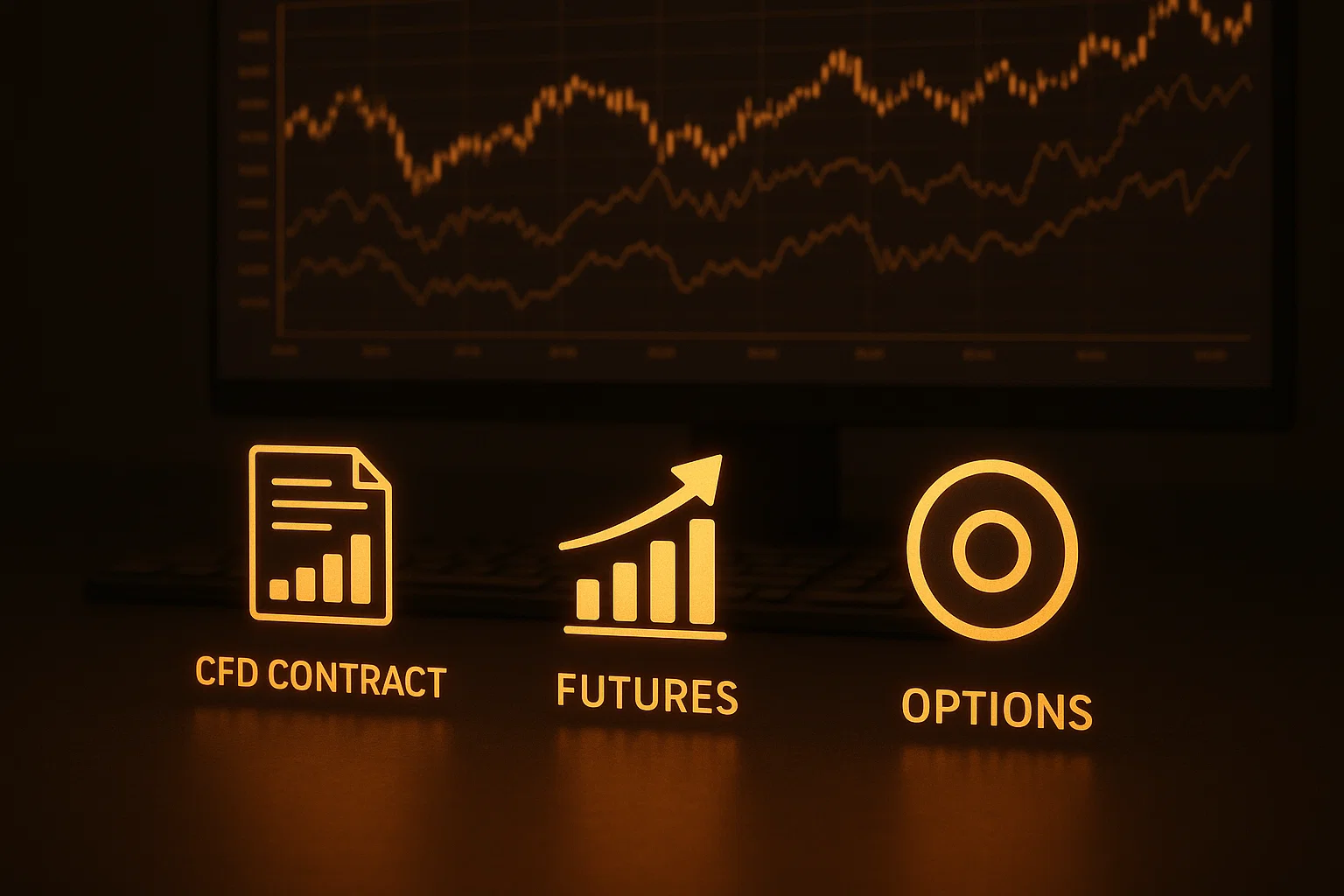
Index trading provides flexibility, allowing you to speculate on market direction through various financial instruments, each tailored for different strategies and risk appetites.
Trading Via CFD
Contracts for Difference (CFDs) are an immensely popular way for retail traders to access index markets. A CFD is an agreement between a broker and a trader to exchange the difference in the value of an index from the time the contract is opened until the time it is closed.
Advantages of CFDs:
- Leverage: CFDs allow trading with leverage, meaning you can control a large position with a relatively small amount of capital (margin).
- Accessibility: They are often available on a wide range of global indices.
- Flexibility: You can easily go long (buy) or short (sell) to profit from both rising and falling markets.
Crucial Warning: The European Securities and Markets Authority (ESMA) and similar bodies globally mandate that all retail brokers disclose a critical statistic: Approximately 70-89% of retail investor accounts lose money when trading CFDs. This staggering figure is often due to the magnified risk that leverage introduces. Trading CFDs requires a disciplined approach to leverage and risk management.
Trading Via Future Contracts
Index futures are legally binding contracts to buy or sell a financial index at a predetermined price at a specified time in the future. They are highly standardized and traded on regulated exchanges (like the CME Group or Eurex).
Futures trading is often preferred by institutional investors and experienced retail traders due to:
- Centralized Clearing: Transactions are guaranteed by a central clearing house, reducing counterparty risk.
- High Liquidity: The major index futures markets are exceptionally liquid.
- Efficiency: They are highly capital-efficient, though the contract sizes are often much larger than CFDs, requiring more initial capital.
A futures price may occasionally diverge slightly from the underlying cash index, reflecting the “cost of carry” until the contract’s expiration date.
Options Trading
Options provide the holder with the right, but not the obligation, to buy (call option) or sell (put option) an index at a specific price (strike price) on or before a certain date (expiration date).
- Calls are purchased when a trader expects the index to rise.
- Puts are purchased when a trader expects the index to fall.
Options are complex instruments often used for hedging or for speculating on volatility. The maximum risk for a buyer of an option is limited to the premium paid, which can be an attractive feature compared to the potentially unlimited loss exposure in futures or leveraged CFD trading when proper risk controls are absent.
Trading With Leverage
Leverage is the use of borrowed capital to increase potential returns from an investment. While this can magnify profits, it also equally magnifies losses.
Leverage Ratio equals Total Position Value divided by Margin Required.
If a broker offers 50:1 leverage, for every dollar of your capital (margin), you control 50 dollars of the index’s value. This is a double-edged sword: a small market move against your position can wipe out your margin quickly. Successful trading with leverage demands a small position size relative to your total account equity, effectively reserving capital to weather adverse market movements. Prudent regulation now caps the maximum leverage available to retail traders on major indices in many jurisdictions (e.g., 20:1 or 30:1 in the EU/UK).
Benefits Trading
Index trading offers distinct advantages over trading individual stocks:
- Diversification: By trading a basket of stocks, you are automatically diversified, reducing the idiosyncratic risk associated with a single company’s failure.
- Liquidity: Major index derivatives are among the most liquid financial instruments globally, ensuring fast, efficient trade execution.
- Macro Focus: It allows you to align your trading strategy with broad macroeconomic trends and policies.
- Cost Efficiency: Trading one index derivative is often more cost-effective than trading every component stock individually.
Strategies For Trading
A robust trading strategy is not merely a set of rules; it is a systematic approach to the market grounded in probabilities and disciplined execution. It should be tested, documented, and never deviated from based on emotion.
Long Term Trading
This strategy involves holding index positions for periods spanning several months to years. Long-term traders focus heavily on fundamental analysis—evaluating economic cycles, geopolitical stability, and long-term monetary policy. They aim to capitalize on the sustained upward bias (or secular trend) that major stock indices historically exhibit. This approach often involves less frequent trading and requires patience to ride out minor corrections and periods of consolidation.
Short Term Trading
Short-term trading involves holding positions for days or weeks. Traders employing this strategy are keen observers of both technical and fundamental developments, reacting to earnings reports, news events, and short-term changes in market sentiment. Their focus is on capturing tactical moves within an existing long-term trend or capitalizing on volatility sparked by economic data releases.
Day Trading
Day trading is characterized by opening and closing all positions within a single trading day, eliminating overnight risk. This highly intensive strategy demands exceptional focus and discipline. Day traders rely almost exclusively on technical analysis, utilizing charts, patterns, and indicators (such as Moving Averages, RSI, and Volume) on very short time frames (e.g., 1-minute to 1-hour charts). The goal is to scalp small profits consistently, accepting that cumulative slippage and transaction costs can be a significant drag on returns if not managed tightly.
Swing Trading
Swing trading seeks to capture gains within a shorter timeframe than long-term trading, generally spanning from two days to a couple of weeks. Swing traders target “swings” in price movement, looking to profit from market fluctuations or a corrective move within a larger trend. They typically utilize a combination of technical indicators, focusing on momentum and key support and resistance levels. A common observation is that swing trading offers a more manageable balance of time commitment compared to day trading.
Patience And Timing
Regardless of the strategy chosen, patience and timing are the most undervalued assets a trader possesses. Impulse trading—making decisions based on fear of missing out (FOMO) or a desire to “get even”—is a proven path to losses. Good timing is the result of waiting for a trade setup to conform precisely to the rules of your trading plan. Successful traders understand that simply being exposed to the market is not the goal; rather, the goal is being exposed to the market only when the probability of success is highest, as defined by their tested edge.
Terms Used In Index Trading
Trading financial indices introduces specific terminology that all beginners must internalize to ensure clarity in execution and risk control.
Spread Explained
The spread is the difference between the bid price (the maximum price a buyer is willing to pay) and the ask price (the minimum price a seller is willing to accept) for an index derivative. It is essentially the transactional cost of executing a trade, representing the broker’s or market maker’s compensation. Tighter (smaller) spreads are generally more favorable for the trader, particularly for high-frequency or day traders. The spread can widen significantly during periods of low liquidity or high market volatility in the markets, increasing the cost of trading.
Lot Explained
In many trading contexts, particularly in Forex, a lot refers to a standardized unit of transaction size. While index CFD and futures contracts have their own specific contract sizes, the concept of a lot represents the quantum of the index you are trading. For a CFD, a standard lot might be 1 unit of the index. Understanding the lot size allows you to correctly calculate your position size and the monetary value of a single index point movement.
Leverage Explained
As discussed, leverage is a tool that allows a trader to control a large notional position using a small amount of margin capital. While it can magnify profits, it increases the risk of margin calls and total capital loss. Managing trading leverage is perhaps the most critical component of risk management. A prudent trader will use lower leverage than their broker offers, often opting for an effective leverage ratio of 5:1 or less on their total account equity.
Margin Explained
Margin is the amount of capital required to open and maintain a leveraged position.
- Initial Margin is the amount required to open the position.
- Maintenance Margin is the minimum equity level that must be maintained in the account.
If your account equity falls below the maintenance margin level, you will receive a margin call, requiring you to deposit additional funds or have your positions automatically liquidated (closed) by the broker to prevent a negative balance. This is a key mechanism for mitigating risk for the broker, but it can lead to substantial losses for the trader.
Pip Explained
A Pip (Price Interest Point or Percentage in Point) is the smallest standardized price movement in a financial instrument. For most indices, the movement is measured in ‘points’ rather than ‘pips,’ but the concept is the same. It represents the smallest unit of change by which the price can fluctuate. Knowing the monetary value of a single point movement for your specific contract size is crucial for accurately calculating potential profits and losses.
Risks And Drawbacks
Index trading carries significant risk, especially when leveraged derivatives are used. The primary drawbacks include:
- Market Risk: The risk that the entire market moves against your position due to unforeseen economic or political events.
- Leverage Risk: The magnified loss potential, as discussed previously.
- Liquidity Risk: Although major indices are highly liquid, minor indices or indices during off-hours trading may experience low liquidity, leading to wider spreads and unfavorable execution.
- Counterparty Risk: While reduced by regulated brokers and clearing houses, this is the risk that the other party to the contract fails to fulfill their obligation.
As a general observation, a well-informed trader never risks more than 1% to 2% of their total account capital on any single trade to safeguard against catastrophic loss.
| Index Name | Market Type | Primary Currency | Typical Traded Derivative | Key Factor |
|---|---|---|---|---|
| S&P 500 | U.S. Stock | USD | E-mini Futures, CFDs | Corporate Earnings, Fed Policy |
| DAX (Germany) | European Stock | EUR | Futures, CFDs | Eurozone Economic Health |
| FTSE 100 (U.K.) | European Stock | GBP | Futures, CFDs | Global Commodity Prices, Bank of England Policy |
Frequently Asked Questions
How do I define index trading in simple terms?
Index trading means speculating on the price movements of a stock market index, which is a statistical measure of the performance of a basket of shares, using derivative products like CFDs, Futures, or Options, without the need to purchase the underlying stocks themselves.
Is index trading legal, and is it regulated?
Yes, index trading is legal across the globe, provided you are using a broker or exchange regulated by the relevant financial authority in your jurisdiction, such as the SEC in the U.S., the FCA in the U.K., or other local regulatory bodies.
How safe is it to trade indexes?
Index trading is not inherently safe; it is a high-risk activity, particularly when employing leverage, and investors can lose all of their capital. However, it can be conducted safely by highly disciplined traders who use strong risk management practices, only trade with risk capital, and ensure their broker is strictly regulated.
What’s the best way to start trading indexes?
You can start trading indexes by first choosing a well-regulated online broker, opening and verifying a trading account, funding the account with risk capital, and then selecting a derivative product like an index CFD or a futures contract to execute your trades based on thorough market analysis.
What are the main types of index trading available?
The primary types of index trading are based on the financial instrument used, including trading through Contracts for Difference (CFDs), trading highly regulated Futures Contracts, and utilizing Index Options contracts, each offering different risk profiles and leverage capabilities.