Welcome to the world of currency exchange, a vast and dynamic financial market that operates 24 hours a day, five days a week. For those new to the concept, What is Forex trading? It’s the exchange of one currency for another, with the goal of making a profit from the fluctuating exchange rates. This comprehensive guide will walk you through the essentials, from defining key concepts to exploring advanced strategies and managing risk, ensuring you have the authoritative and expert foundation needed to begin your trading journey.
Forex Trading Definition and Basics
What is Forex
Forex, an acronym for Foreign Exchange, is the largest and most liquid financial market globally. It is the decentralized global market where all the world’s currencies trade. Unlike trading stocks, which often involves a centralized exchange like the NYSE, forex transactions happen primarily through an over-the-counter (OTC) market, facilitated by a global network of banks, brokers, and financial institutions. The market’s immense scale means transactions can be executed rapidly, offering unparalleled accessibility.
How currency market works
The currency market works based on the principle of supply and demand, influenced by a multitude of global factors. When you trade forex, you are always trading currency pairs, such as EUR USD (Euro versus US Dollar). When you buy a pair, you are simultaneously buying the first currency (the base currency) and selling the second currency (the quote currency). Exchange rates reflect the relative strength of one currency against the other. For instance, if the EUR USD rate is 1.0800, it means 1 Euro can buy 1.0800 US Dollars. Currency rates are constantly changing due to economic releases, geopolitical events, and market sentiment, creating opportunities for traders.
Who trades currencies
A diverse group of participants trades currencies, ranging from massive financial institutions to individual retail traders. The primary participants include:
- Large Commercial Banks: These entities form the backbone of the market, conducting massive trades for their own accounts, facilitating client transactions, and often determining the interbank exchange rates.
- Multinational Corporations: Companies trade forex to hedge risk associated with international business, covering future payments or receivables in foreign currencies.
- Central Banks: Monetary authorities, such as the US Federal Reserve or the European Central Bank, intervene in the forex market to stabilize their national currencies, manage interest rates, and control inflation.
- Hedge Funds and Investment Managers: These professional firms execute speculative trades on behalf of their clients, often using sophisticated strategies and high leverage.
- Retail Traders: Individuals who speculate on currency price movements via online brokerage accounts.
Types of Forex market (Spot, Forward, Future)
The forex market operates through three main segments, each with a different timeframe for settlement:
- Spot Forex Market: This is the most common market for retail traders. Transactions here involve the immediate exchange of currencies, typically settling within two business days (T+2). The price is the current market price, or “spot” price.
- Forward Forex Market: This involves a customizable, over-the-counter contract to buy or sell a specific currency amount at a predetermined price on a specified future date. This is often used by corporations to lock in an exchange rate for a future transaction, thus managing currency risk.
- Future Forex Market: Similar to forwards, but these are standardized, legally binding contracts traded on organized exchanges (like the CME). They specify a set size, settlement date, and are settled daily.
How Forex Trading Works
Bid and ask prices
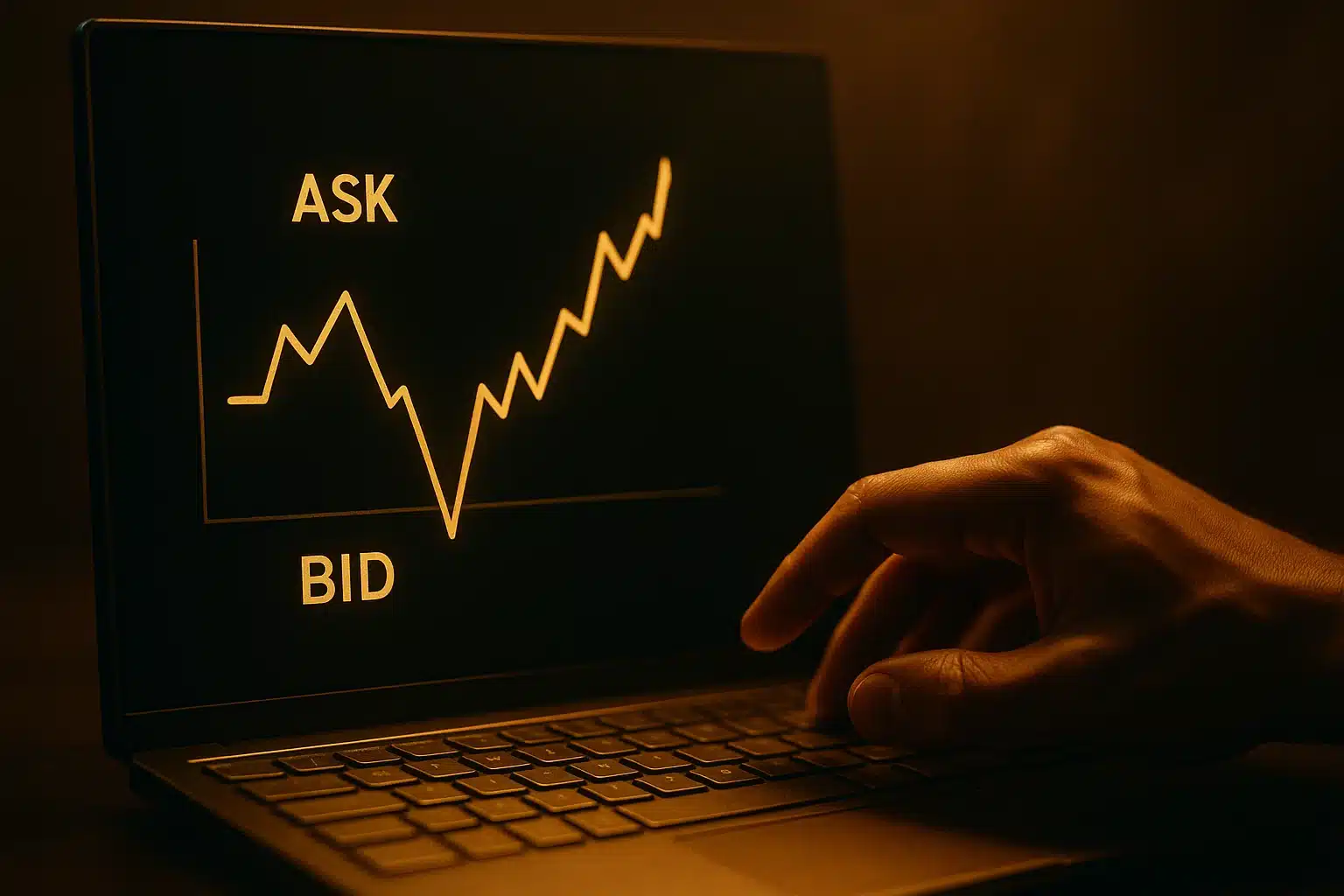
Every currency pair has two prices: the Bid price and the Ask price. The Ask price (also known as the offer) is the price at which the broker is willing to sell the base currency to you (and you, as the trader, are buying). The Bid price is the price at which the broker is willing to buy the base currency from you (and you are selling). The difference between the Bid and the Ask price is the spread, which is essentially the transaction cost for the trade.
Going long or short
In forex trading, you have the flexibility to profit when a currency is strengthening or weakening.
- Going Long (Buying): You buy a currency pair (e.g., EUR USD) when you expect the base currency (EUR) to strengthen, or the quote currency (USD) to weaken. You profit if the exchange rate rises.
- Going Short (Selling): You sell a currency pair (e.g., EUR USD) when you expect the base currency (EUR) to weaken, or the quote currency (USD) to strengthen. You profit if the exchange rate falls.
Rollover and swap definition
When a trading position is held open overnight, it is subject to a rollover or swap fee. This is the interest rate differential between the two currencies in the pair for holding the position past the closing time of the New York trading session (typically 5 PM EST).
- If you buy a currency with a higher interest rate and sell a currency with a lower interest rate, you may earn interest (a positive swap).
- If you buy a currency with a lower interest rate and sell one with a higher interest rate, you will typically pay interest (a negative swap).
The precise calculation varies by broker and may involve three times the swap fee on Wednesdays to account for weekend interest.
Forex trading example
Imagine the current EUR USD exchange rate is 1.1000.
- Trade Entry: You believe the Euro will strengthen, so you buy (go long) 1 standard lot (100,000 units) of EUR USD at 1.1000.
- Market Movement: The Euro strengthens against the Dollar, and the rate moves to 1.1050.
- Trade Exit: You sell (close) your position at 1.1050.
- Profit Calculation: The rate moved 50 pips (1.1050 – 1.1000 = 0.0050). Assuming a pip value of $10 per standard lot, your gross profit is calculated as 50 pips multiplied by $10 per pip, equaling $500.
Conversely, if the rate had fallen to 1.0950, you would incur a loss of $500 (before factoring in the spread).
Why Trade Forex
Liquidity and volatility
The sheer size of the forex market—which sees trillions of dollars traded daily—results in exceptional liquidity. This means orders can typically be executed quickly and at competitive prices, reducing the risk of significant slippage under normal market conditions. However, the market also exhibits high volatility, especially during key economic announcements. This volatility, while carrying risk, creates the price movement necessary for traders to realize profits. Managing the tension between high liquidity and high volatility is a central skill for successful traders.
Around-clock trading opportunities
One of the most attractive features of the forex market is its 24-hour operation, five days a week, from Sunday evening (EST) to Friday afternoon (EST). This is possible because the market follows the sun, moving between major financial centers: Sydney, Tokyo, London, and New York. This continuous nature allows traders to react to news events immediately and to choose trading hours that best suit their personal schedule, unlike stock markets with defined opening and closing bells.
Capital efficiency
Forex trading allows for high capital efficiency, primarily through the use of leverage offered by brokers. Leverage is a loan provided by the broker, allowing you to control a large notional value of currency with a relatively small amount of capital (margin) in your account. For example, a 50:1 leverage ratio means you only need $2,000 of margin to control a position worth $100,000. While leverage can significantly multiply profits, it is vital to remember it equally magnifies potential losses.
Hedging with forex
Forex is widely used for hedging, which is the process of minimizing or neutralizing exposure to adverse exchange rate movements. A multinational company, for example, that expects a large payment in Euros in three months may sell a Euro forward contract today to lock in a specific exchange rate. This protects the company from a potential depreciation of the Euro, stabilizing the financial outcome of the foreign transaction. Retail traders may also use currency pairs to hedge other investments.
Market Movers and Price Influences
Currency prices are driven by complex and interconnected macroeconomic and political forces.
Central Banks role
Central banks are arguably the most influential players. Their decisions on interest rates, open market operations, and quantitative easing/tightening policies directly impact a currency’s supply and demand. For example, a central bank raising its benchmark interest rate makes its currency more attractive to foreign investors seeking higher returns, which typically leads to the currency strengthening. Comments and guidance from central bank officials are closely monitored by traders.
News reports impact
Major news reports and geopolitical events can cause swift and sharp market reactions. These include elections, trade negotiations, political crises, and unexpected government announcements. The sheer uncertainty introduced by such events can lead to rapid shifts in market sentiment and subsequent price spikes or drops. Traders often use volatility surrounding these events to their advantage, though the risks are significantly higher.
Economic releases
Scheduled economic releases provide essential insight into a country’s economic health and are a primary driver of short-term volatility. Key data releases include:
- Gross Domestic Product (GDP): The broadest measure of economic activity.
- Consumer Price Index (CPI): The key metric for inflation.
- Non-Farm Payrolls (NFP): The monthly release of employment data in the US, which heavily influences USD pairs.
- Retail Sales: An indicator of consumer spending.
A better-than-expected data point may indicate a stronger economy, leading to a rise in the national currency, though this is not always a guaranteed outcome.
Market sentiment analysis
Market sentiment refers to the overall attitude or feeling of traders towards a particular currency or economic outlook. If the majority of traders are optimistic about a country’s future, they will likely buy its currency, creating positive sentiment. Conversely, fear or pessimism can trigger selling pressure. Analyzing market sentiment, often through tools that track trader positioning, is an important part of a trader’s decision-making process.
Commodity prices influence
For currencies of countries that are major commodity exporters (like the Canadian Dollar or the Australian Dollar), commodity prices influence their value. For instance, the Canadian Dollar (CAD) is often referred to as a “commodity currency” due to Canada’s significant oil exports. When crude oil prices rise, the value of those exports increases, potentially strengthening the CAD. Conversely, a sharp drop in oil prices may lead to CAD depreciation. This relationship suggests a valuable intermarket correlation for traders to observe.
Forex Trading Strategies
Successful forex traders do not rely on chance; they employ systematic strategies tailored to their personality, risk tolerance, and available time.
Trend trading strategy
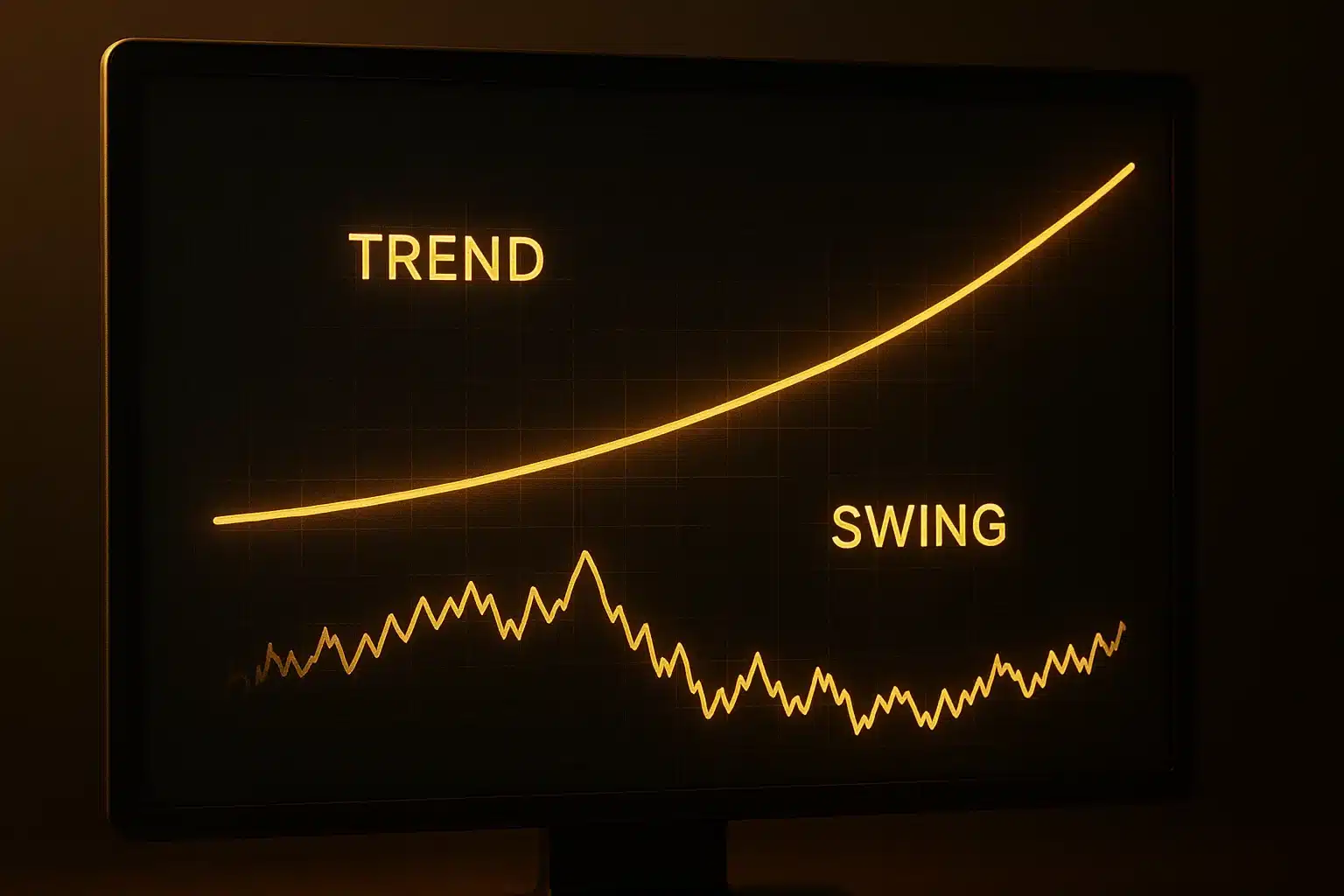
Trend trading is a strategy where a trader attempts to profit by analyzing the momentum of a currency pair and positioning themselves to follow the direction of the market’s long-term trend. This strategy assumes that prices are more likely to continue moving in their established direction than to reverse. Traders often use indicators like moving averages and trend lines to identify and confirm the strength and direction of a trend. The key to this strategy is disciplined position sizing and riding the trend until clear signals of reversal emerge.
Scalp trading
Scalp trading is an aggressive, short-term strategy where traders attempt to profit from tiny price changes, often closing a trade within seconds or minutes. Scalpers execute a high volume of trades throughout the day, looking to accumulate small profits that add up to a significant gain. This approach requires extreme focus, high leverage, a tight spread, and the ability to make rapid decisions under pressure. It is generally not recommended for beginners due to the demanding nature and high transaction costs associated with frequent trading.
Swing trading
Swing trading occupies a middle ground between day trading and long-term trend following. Swing traders hold positions for several days to a few weeks, aiming to capture “swings” in price movement. They typically rely on technical analysis, using support and resistance levels, candlestick patterns, and oscillators to predict where the next swing will occur. Since trades are held overnight, swing traders must account for swap fees and potential weekend market gaps.
Day Trades vs Position Trades
These terms define the time horizon of a trade:
- Day Trades: Trades are opened and closed within the same trading day. The key principle is to avoid overnight risk and swap fees.
- Position Trades: Trades are held for long periods, potentially weeks, months, or even years. Position traders primarily rely on fundamental analysis of long-term economic trends and interest rate differentials.
Multiple Time Frame Analysis
Multiple Time Frame Analysis (MTFA) is a powerful technique where traders view the same currency pair across different charts (e.g., monthly, daily, and 4-hour charts) to gain perspective. The general best practice suggests:
- High Time Frame (Monthly/Weekly): Used to determine the major market trend and overall direction.
- Intermediate Time Frame (Daily/4-Hour): Used to identify key support and resistance levels within the major trend.
- Low Time Frame (1-Hour/15-Minute): Used to pinpoint precise entry and exit points for the trade.
This layered approach helps traders avoid trading against the primary trend, which may indicate a higher probability of success.
Risks and Rewards
Risks of forex trading
While the potential rewards are significant, the risks of forex trading are equally serious and must be acknowledged with transparency. The primary risk factor is the use of leverage, which can amplify both profits and losses. As stated by a leading financial regulatory body, “Approximately 70-89% of retail investor accounts lose money when trading CFDs.” Key risks include:
- Leverage Risk: High leverage can lead to the quick depletion of a margin account if a trade moves against the position.
- Market Volatility Risk: Sudden, unexpected price moves, often triggered by news, can result in slippage and larger-than-expected losses.
- Counterparty Risk: Though highly regulated, the risk of a broker failure exists.
- Interest Rate Risk: Changes in central bank rates can negatively affect position value due to swap adjustments.
Pros and Cons
Choosing to trade forex involves weighing its unique advantages against its inherent drawbacks:
| Pros | Cons |
|---|---|
| High Liquidity | High Leverage Risk |
| 24/5 Market Access | Requires Extensive Knowledge |
| Low Transaction Costs (Spreads) | Emotional Discipline Required |
| Ability to Go Long or Short | Exposure to Global Events |
| Capital Efficiency | Potential for Margin Call |
Discover risks and rewards
The most crucial step in managing trading is to discover risks and rewards before placing any trade. This involves:
- Pre-Trade Analysis: Defining a specific target profit (reward) and maximum tolerable loss (risk) before entry.
- Risk-to-Reward Ratio: A fundamental rule of thumb suggests that a trader should only take trades where the potential reward is significantly greater than the potential risk (e.g., aiming for a 2:1 or 3:1 ratio).
- Stop-Loss Orders: Utilizing mandatory Stop-Loss orders to automatically close a position if the price reaches a predetermined loss level, which is a vital tool for mitigating risk.
- Position Sizing: Calculating the correct trade size so that any single loss does not exceed a small percentage (e.g., 1-2%) of the total trading capital.
Is forex trading right for me
Is forex trading right for me is a question only you can answer after careful self-assessment. Trading is not a guaranteed path to wealth; it requires capital that you can afford to lose, significant time for education and practice, and strong emotional discipline. If you are comfortable with high-risk scenarios, committed to a continuous learning process, and can maintain objectivity during market turbulence, then forex trading may be a suitable endeavor. However, in some cases, starting with a demo account is the responsible first step to test the waters without financial commitment.
Frequently Asked Questions
How do I trade forex?
To trade forex, you must first open an account with a regulated forex broker. After funding the account, you will use the broker’s trading platform to select a currency pair, analyze the market using charts and news, and execute a trade by deciding whether to buy (go long) or sell (go short) the pair, ensuring you set appropriate stop-loss and take-profit orders to manage risk effectively.
How do forex traders make money?
Forex traders make money by successfully predicting the future direction of exchange rate movements. If a trader buys a currency pair and the base currency appreciates relative to the quote currency, the trader can sell the position back for a profit. Conversely, they can profit if they sell a pair and the base currency depreciates. Their profit is the difference between the entry price and the exit price, multiplied by the size of the position, minus any costs like the spread or swap fees.
Is forex trading 24-hours?
Yes, forex trading is considered a 24-hour market, operating continuously five days a week. Trading starts in the Asian session (Sydney/Tokyo) on Sunday evening EST and continues non-stop through the European session (London) and the North American session (New York) until the market closes on Friday afternoon EST.
When is the best time to trade forex market?
The best time to trade the forex market is generally when two major sessions overlap, leading to higher liquidity and volatility. The most active overlap is between the London and New York sessions (typically 8:00 AM to 12:00 PM EST), as most of the world’s major currency transactions occur during this four-hour window, providing the tightest spreads and the most pronounced price action.
How much money is traded daily?
The forex market is the largest financial market globally, with the average daily trading volume exceeding 7.5 trillion US dollars, according to recent figures from the Bank for International Settlements (BIS). This enormous figure underscores the unparalleled liquidity and depth of the foreign exchange market.