Crypto trading has emerged as one of the most dynamic and rapidly evolving areas in the financial world. It represents the speculative practice of buying and selling digital currencies, such as Bitcoin and Ethereum, to profit from price fluctuations. Unlike traditional stock markets, the crypto market operates 24 hours a day, seven days a week, making it accessible yet intensely demanding.
For individuals looking to participate, crypto trading involves either the direct purchase and sale of the underlying digital assets on an exchange or speculating on their price movements using derivative products like Contracts for Difference (CFDs). This requires a deep commitment to market analysis, a clear risk management strategy, and a strong understanding of the underlying technology.
Definition and Meaning
Cryptocurrency Explained
A cryptocurrency is fundamentally a digital or virtual currency secured by cryptography, making counterfeiting nearly impossible. Crucially, most cryptocurrencies are decentralized, meaning they are not controlled by a single central authority, like a bank or government. This characteristic stems from the use of blockchain technology, which acts as a distributed public ledger.
The first and most famous example is Bitcoin (BTC), launched in 2009. Since then, thousands of other digital assets, known as altcoins, have been created, each with its own protocol and purpose.
Trading versus Long-Term Investing
The terms “trading” and “investing” in the context of digital assets are often used interchangeably, but they refer to distinct strategies based on time horizon and objective.
| Strategy | Time Horizon | Primary Goal | Core Activity |
|---|---|---|---|
| Trading | Short- to Medium-Term (minutes to months) | Profit from short-term price volatility | Buying low, selling high (or short-selling) |
| Long-Term Investing | Long-Term (years or decades) | Accumulate wealth based on asset growth | Buying and holding strong assets (HODL) |
Trading focuses on leveraging technical analysis to capitalize on immediate price movements, while investing prioritizes fundamental analysis of the asset’s utility, team, and long-term potential. As financial experts often note, the mindset and tools required for each approach differ significantly.
Buying and Selling via an Exchange
The most direct way to engage in crypto trading is by using a dedicated crypto exchange. These platforms—such as Binance, Coinbase, or Kraken—act as intermediaries where you can exchange traditional fiat currency (like USD or EUR) for cryptocurrencies, or trade one cryptocurrency for another (e.g., BTC for ETH).
When you purchase a coin directly on an exchange, you take ownership of the underlying asset. The coins are then typically stored in a digital wallet linked to your account, requiring you to manage security elements like private keys.
CFD Trading on Cryptocurrencies
An alternative approach is trading cryptocurrencies using a Contract for Difference (CFD), usually offered by traditional online brokers. A CFD is a derivative product where you speculate on the price movement of the underlying asset without ever taking ownership of the actual cryptocurrency.
CFD trading allows you to:
- Go Long: Buy if you predict the price will rise.
- Go Short: Sell if you predict the price will fall.
- Use Leverage: Magnify your potential profits or losses (see Essential Trading Terms).
It is crucial to be transparent about the risks: Approximately 70–89% of retail investor accounts lose money when trading CFDs. The leveraged nature of these products means losses can exceed the initial margin deposit. Reputable brokers often display prominent risk warnings, emphasizing the high-risk nature of this trading method.
How Crypto Markets Work

What is Blockchain Technology
At the core of all cryptocurrency markets is the blockchain. It is a decentralized, distributed, and public digital ledger used to record transactions across many computers so that the record cannot be altered retroactively without the alteration of all subsequent blocks and the consensus of the network.
When a transaction is made, it is bundled into a “block” and, once validated by the network’s computers (nodes), it is added to the end of the chain. This process ensures transparency and immutability. As Dr. Wladimir J. O. de Costa, a financial technology specialist, states, “The blockchain is not just a ledger; it is a global consensus mechanism that underpins all digital value transfer.”
What is Cryptocurrency Mining
Mining is the process by which new cryptocurrency units are typically created and transactions are verified on a blockchain network that uses a Proof-of-Work (PoW) consensus mechanism, such as early Bitcoin.
Miners use powerful computers to solve complex mathematical puzzles. The first miner to find the solution gets to add the next block of verified transactions to the blockchain and is rewarded with newly minted cryptocurrency (the block reward) plus transaction fees. This mechanism secures the network and incentivizes participation, though energy consumption is a major point of criticism.
Price Volatility and What Moves Markets
Cryptocurrency markets are notorious for their volatility, experiencing rapid and dramatic price swings. This volatility is a double-edged sword: it creates significant opportunity for traders but also carries high risk.
What primarily moves these markets is a complex mix of factors, including:
- Supply and Demand Dynamics: The fundamental principle of scarcity (e.g., Bitcoin’s hard cap of 21 million coins).
- Market Sentiment: News, regulatory announcements, social media trends (FOMO—Fear Of Missing Out, and FUD—Fear, Uncertainty, and Doubt), and trader psychology.
- Adoption and Utility: Real-world use cases, technological updates, and institutional investment.
- Macroeconomic Factors: Global inflation rates, interest rate changes, and geopolitical events.
A sudden surge in institutional investment, for example, may indicate a shift in market confidence, leading to a strong upward price movement.
How Supply and Demand Affect Value
Like any asset, the price of a cryptocurrency is ultimately determined by the equilibrium between supply (how many coins are available for sale) and demand (how many people want to buy them).
- High Demand + Low Supply = Increased Price
- Low Demand + High Supply = Decreased Price
The fixed or mathematically controlled supply of assets like Bitcoin (due to periodic events known as ‘halvings’ that cut the new supply in half) means that if adoption and interest (demand) continue to rise, the limited supply will likely push prices higher. However, a major regulatory crackdown could instantly reduce demand, causing an immediate price drop, regardless of the supply cap.
Getting Started with Trading
How to Buy Cryptocurrency
Your journey into crypto trading begins with a secure and deliberate process:
- Select a Reputable Exchange or Broker: Choose a platform that aligns with your trading style (spot vs. CFD) and is regulated in your jurisdiction.
- Verify Your Identity (KYC): Due to Know Your Customer (KYC) and Anti-Money Laundering (AML) regulations, you will need to provide personal identification.
- Fund Your Account: Link your bank account and deposit fiat currency or another digital asset.
- Place Your First Order: Choose your asset (e.g., BTC/USD) and execute a buy order.
Creating and Funding Your Account
Account creation is straightforward but security-intensive. Most major exchanges require two-factor authentication (2FA) for all login and withdrawal attempts. Funding is often done via bank transfer, credit card, or linking another wallet. Note that credit card deposits may incur higher fees than bank transfers.
Selecting a Storage Method (Wallets)
A digital wallet is essential for holding cryptocurrencies purchased on an exchange. It is a software program or physical device that stores the keys (private and public) needed to access and transact with your coins on the blockchain.
- Hot Wallets: Connected to the internet (e.g., exchange wallets, mobile apps). Convenient for active trading, but generally considered less secure for large holdings.
- Cold Wallets: Offline storage (e.g., hardware wallets, paper wallets). Considered the most secure for long-term storage, as they are immune to online hacks.
Best Practice: Use a hot wallet for the funds actively being traded and a cold wallet for the bulk of your assets.
What to Do Before Investment
Before committing capital, a rigorous pre-investment checklist is mandatory, especially in the volatile crypto space:
- Define Your Risk Tolerance: Never invest capital you cannot afford to lose. Given the volatility, only a small, disposable portion of your portfolio should be allocated to speculative crypto trading.
- Develop a Trading Plan: This plan should outline your entry and exit criteria, your target assets, and your risk-per-trade limit (e.g., risking no more than 1% of your total capital on a single trade).
- Conduct Due Diligence (DYOR): Research the chosen asset’s technology, team, and market capitalization.
Essential Trading Terms
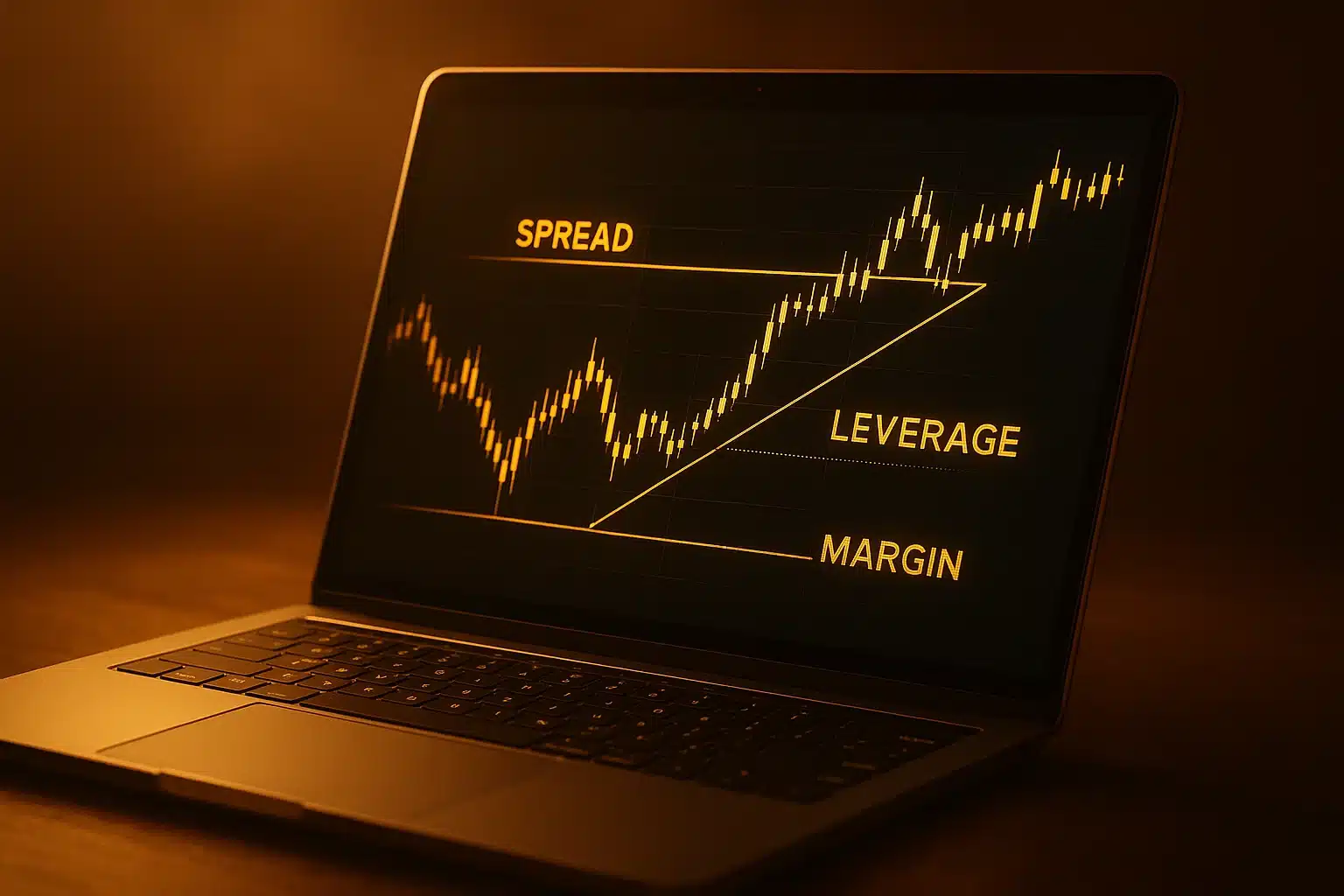
A trader must be fluent in the unique lexicon of the financial markets to execute a sound strategy.
What is a Spread
The spread is the difference between the highest price a buyer is willing to pay for an asset (bid price) and the lowest price a seller is willing to accept (ask price). It represents a trading cost and, in some cases, the exchange or broker’s profit margin. A tighter spread usually indicates higher market liquidity.
What is Lot
A lot is a unit used to measure the size of a trade. While stocks are measured in shares, and forex is measured in specific currency units, crypto trades can vary. For CFDs, a lot size is standardized by the broker (e.g., one standard Bitcoin lot might be one BTC). For direct exchange trading, a trader can often buy fractional amounts of a coin.
What is Leverage
Leverage is the use of borrowed capital from a broker to increase the potential return of an investment. For example, 10:1 leverage allows you to open a position worth $10,000 with only $1,000 of your own capital (margin).
While leverage can amplify profits, it is a significant factor in losses, as the profit/loss is calculated on the full exposure size, not just your margin.
What is Margin
Margin is the initial capital required to open and maintain a leveraged trading position. It is not a fee but a deposit set aside to cover potential losses. If your position moves against you and the loss depletes your margin to a certain point, a margin call may be triggered, requiring you to deposit more funds or face automatic closure of your position.
What is a Pip
A pip (Price Interest Point) is a unit of measurement to express the change in value between two assets. While traditionally used in Forex, in crypto, movements are often measured in dollar amounts or fractions of a cent, but the concept remains: it is the smallest unit of price movement for a given asset, usually referring to a one-digit movement at a specific decimal place.
Common Cryptocurrency Terms
Familiarity with these terms is key to navigating the trading landscape:
- Altcoin: Any cryptocurrency other than Bitcoin.
- HODL: A slang term (an intentional misspelling of “hold”) referring to the strategy of holding a cryptocurrency through market volatility rather than selling.
- Market Cap (Market Capitalization): The total value of all coins currently in circulation. Calculated by: Current Price x Circulating Supply.
- Liquidity: The ease with which an asset can be bought or sold without significantly impacting its price. High liquidity is generally preferred by active traders.
- Tokenomics: The supply, distribution, and incentive structure of a crypto asset.
Strategies for Trading
Developing a robust crypto trading strategy is critical, as relying on pure chance is a recipe for long-term loss. Experienced traders use various methodologies to capitalize on market movements.
Day Trading: Definition and Approach
Day trading involves opening and closing positions within the same trading day, avoiding holding positions overnight. The goal is to profit from small, intraday price fluctuations.
- Time Frame: Focuses on very short time frames, such as 1-minute, 5-minute, or 15-minute charts.
- Requirement: Requires intense focus, constant monitoring, and swift decision-making. Traders must be emotionally disciplined to quickly take small profits and accept small losses.
Scalping: Fast-Paced Trading
Scalping is an extremely short-term form of day trading. Scalpers attempt to make profit from very small price movements by executing a large volume of trades throughout the day. Positions are typically held for only a few seconds to a few minutes. This strategy capitalizes on the market’s high liquidity and tight spreads. This aggressive approach is generally only suited for traders with significant experience and highly automated systems.
Swing Trading: Riding Market Trends
Swing trading is a medium-term strategy where traders seek to capture gains over a period of a few days to a few weeks. Swing traders look for trends and patterns that suggest a price move (a ‘swing’) is about to occur.
- Focus: A combination of technical analysis (identifying support and resistance levels) and fundamental analysis (evaluating upcoming news events).
- Advantage: Less time-intensive than day trading, allowing traders to monitor charts less frequently.
Arbitrage: Profiting from Price Differences
Arbitrage is a low-risk strategy that involves simultaneously buying a cryptocurrency on one exchange where the price is lower and selling it on another exchange where the price is momentarily higher. This strategy exploits brief pricing inefficiencies that occur between different platforms. Due to the rapid and automated nature of modern crypto markets, successful arbitrage trading is largely dependent on having sophisticated, high-speed software and low transaction fees.
HODL (Buy and Hold)
While technically an investment strategy, HODL is worth noting as the foundational decision for many who enter the crypto space. It involves buying a cryptocurrency and holding it long-term, ignoring short-term volatility, with the belief that its value will increase over many years. This strategy minimizes transaction fees and the emotional stress associated with active trading.
Platforms and Tools
The right environment and tools are essential for success in crypto trading.
Choosing a Trading Platform
Selecting a platform depends on your trading style (direct ownership vs. derivatives) and geographical location. Look for platforms that offer:
- Security: Multi-factor authentication, cold storage for user funds, and a strong regulatory track record.
- Liquidity: High trading volume to ensure your orders can be executed quickly at the desired price.
- Fees: A transparent and competitive fee structure, including trading fees, withdrawal fees, and, for CFDs, overnight financing charges.
Technical Analysis Tools
Technical analysis (TA) is the study of historical price action and volume to predict future market movements. Key tools include charting software with overlay indicators.
| Tool Category | Example Indicators | Purpose |
|---|---|---|
| Trend Indicators | Moving Averages (MA), MACD | Identify the direction and momentum of the price trend. |
| Momentum Indicators | Relative Strength Index (RSI) | Measure the speed and change of price movements; signal overbought/oversold conditions. |
| Volatility Indicators | Bollinger Bands | Measure market volatility and identify potential price boundaries. |
Using these tools helps a trader make decisions based on measurable market data, rather than on emotion or pure speculation.
Trading Indicators: RSI, MACD, Moving Averages
- Relative Strength Index (RSI): This momentum oscillator measures the magnitude of recent price changes to evaluate overbought or oversold conditions. A reading above 70 may suggest an asset is overbought, while a reading below 30 may indicate it is oversold.
- Moving Average Convergence Divergence (MACD): This trend-following momentum indicator shows the relationship between two moving averages of a cryptocurrency’s price. Crossovers of the MACD line and the Signal line are often used to generate buy or sell signals.
- Moving Averages (MA): These indicators smooth out price data over a specific period, creating a continuously updated average price. They help confirm trends and identify support and resistance levels. A common signal is a “Golden Cross” (short-term MA crossing above long-term MA, suggesting a bullish trend).
Third Party Platforms
Beyond primary exchanges, crypto trading often utilizes third-party services that enhance capabilities:
- Charting Software: Specialized platforms (e.g., TradingView) for more advanced charting and custom indicator creation.
- Portfolio Trackers: Tools to monitor and manage multiple asset holdings across various exchanges and wallets.
- Trading Bots/Algorithms: Automated systems that execute trades based on pre-set conditions, particularly useful for high-frequency or arbitrage strategies.
Frequently Asked Questions
What are popular crypto pairs?
The most popular crypto trading pairs typically involve a major cryptocurrency—such as Bitcoin (BTC) or Ethereum (ETH)—combined with a highly stable asset like the US Dollar (USD) or a pegged stablecoin, most commonly Tether (USDT) or USD Coin (USDC), because these combinations offer the highest levels of liquidity and trading volume necessary for efficient execution. High liquidity is crucial for active traders, and common examples include BTC/USDT, ETH/USD, and major crypto-to-crypto pairings like ETH/BTC; however, as the market evolves, altcoins paired with stablecoins, such as SOL/USDT or BNB/USDT, are also gaining significant traction, particularly when those underlying assets experience periods of high interest or market momentum.
Can crypto exchange be centralized?
Yes, the vast majority of cryptocurrency exchanges used by beginners and institutional investors alike are centralized exchanges (CEXs), which operate under the control of a single corporate entity that manages all funds and transaction matching in a manner similar to a traditional stock brokerage, thereby providing familiar interfaces, high execution speed, and customer support. While this centralization offers convenience and often superior liquidity, it inherently introduces counterparty risk—the risk that the exchange could be subject to hacking or regulatory action—which stands in contrast to decentralized exchanges (DEXs), where trading occurs peer-to-peer directly on the blockchain, aligning more closely with the foundational philosophy of decentralized finance.
How are crypto transactions taxed?
In many major jurisdictions, including the United States, the UK, and several European nations, crypto transactions are generally treated as property or an asset for tax purposes rather than as a currency, meaning that a taxable event is triggered whenever you sell, trade, or otherwise dispose of your digital assets for a profit. If you hold the asset for less than a year before disposing of it, the resulting gain is typically classified as a short-term capital gain and is taxed at your ordinary income rate, whereas assets held for more than a year are generally subject to a more favorable long-term capital gains tax rate, although receiving crypto as payment for services or as a reward from activities like mining or staking is generally taxed immediately as ordinary income.